By Wikus Engelbrecht
A small wound. A few drops of blood. An animal that slips into the bush before anyone realises it has been hurt. When a pellet strikes a living creature, the damage can be almost impossible to see.
What looks like a graze may conceal a pellet lodged under the skin, a shattered bone, internal bleeding or a damaged spinal cord. By the time the animal is found injured, the harm may be irreversible.
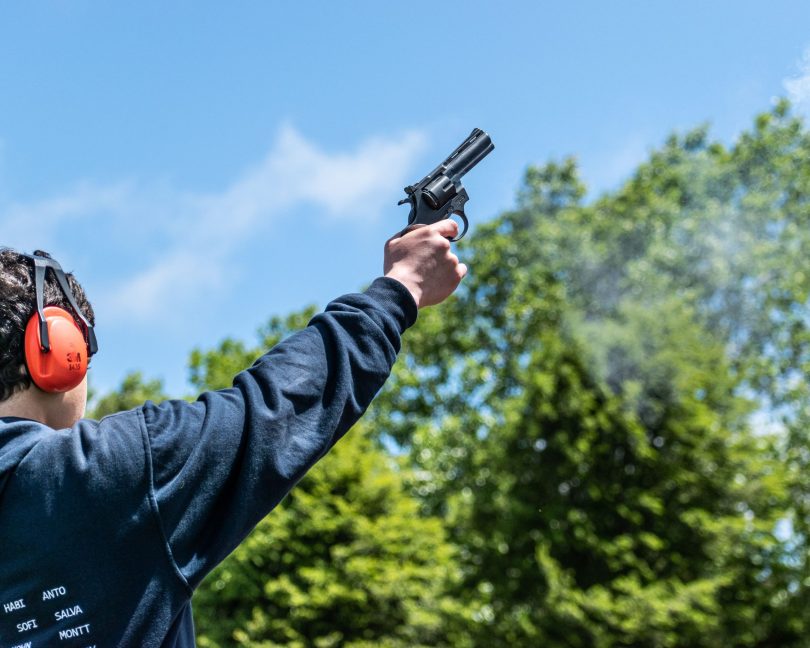
Animal welfare organisations and conservation authorities have repeatedly raised the alarm about animals being shot with airguns, often in residential areas and sometimes, it appears, for amusement.
Baboons, monkeys, birds, dassies, cats and dogs have all been common victims.
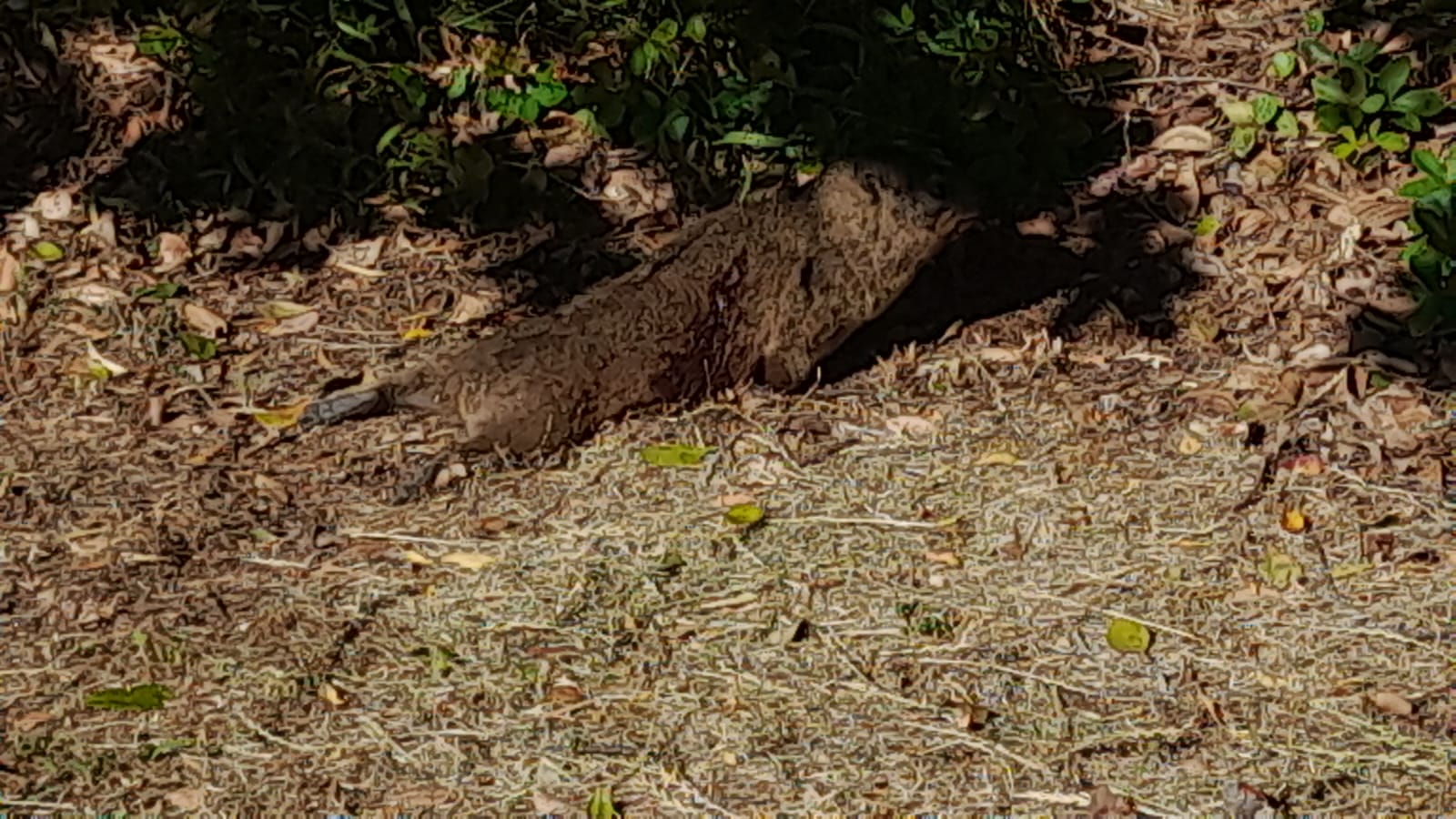
The issue has now surfaced in Still Bay. On Wednesday, 11 November, a resident contacted the Wild Rescue nature reserve after finding an injured dassie near a jetty on the river.
The animal had a wound on its side and seemed unable to use its hind legs. The resident feared it was suffering beyond recovery and had tried, without success, to reach CapeNature for help.
According to the witness on the scene, it was apparent from the injury that a pellet gun was involved. The case shows how vulnerable wildlife is where it lives alongside urban areas, and how hard it can be to get help when a suffering animal is found.
Swellendam Municipality’s by-law prohibits the discharge of firearms, airguns and air pistols, including pellet guns, on any premises. The restriction is not limited to public streets and appears to apply to private residential properties as well.
An exception is made for land zoned for agricultural purposes that does not form part of a township’s general plan. Residents should therefore be aware that firing an airgun or pellet gun in a residential yard may constitute a by-law offence.
One little pellet can inflict great harm
The belief that pellet guns are relatively harmless is incorrect. An airgun pellet is small, but it can penetrate tissue and do serious damage. Depending on where it strikes, an animal may suffer broken bones, eye injuries, perforated organs, internal haemorrhage or spinal injury. A pellet can stay in the body long after the skin has healed over it.
Veterinarians describe the same pattern again and again. A wildlife clinic at the University of Illinois recently treated a goose that arrived with a single small wound and one palpable pellet.
X-rays revealed two more pellets, along with fractures of the wing and pelvis, and a later examination found that the wound tracked almost ten centimetres under the breastbone.
In the United Kingdom, the RSPCA reported a cat whose pellets went unnoticed for so long that bone calcified around one of them, leaving vets weighing amputation of the leg. In January 2023 a peacock in the UK was put down after X-rays showed six pellets had gone through its body and shattered a leg.
The scale of the problem is hard to measure, because so many victims are never found. The RSPCA’s Stapeley Grange Wildlife Centre in Cheshire alone treats between 50 and 70 animals shot with airguns every year, among them swans, geese, birds of prey, badgers, foxes and squirrels.
Its manager said that what reaches the centre is probably only the tip of the iceberg. Across England and Wales, the RSPCA reported a 30 percent rise in airgun attacks on cats in 2024, from 54 incidents the year before to 70.
A pattern of harm
In South Africa, the clearest evidence comes from the Cape Peninsula’s baboons. In an article published in June 2022, the Cape of Good Hope SPCA reported that 90 percent of the baboons its veterinary team had X-rayed for any reason carried at least one metal pellet in their bodies.
This is not a population-wide survey, but it is a striking finding from the animals the organisation has treated. Exasperated by human-wildlife conflict; this is a particularly disturbing indication of how widespread pellet-gun injuries can become in certain animal populations.
The SPCA lists pellet-gun injuries among the leading causes of death for peninsula baboons.
The SPCA has recorded a paralysed baboon with a pellet lodged in its spinal cord, a juvenile found dead in Constantia after a pellet penetrated its heart, and a female whose gut was perforated.
All of them were in areas where people live. In October 2022 the SPCA opened a criminal case after a baboon in Constantia was found with several pellets in its body, laying charges under both the Animals Protection Act and the Firearms Control Act.
The pattern is not confined to South Africa. In 2022 the Australia Zoo Wildlife Hospital admitted a possum carrying three air-rifle pellets, a lace monitor with a concussion and a broken jaw, and an osprey that had to be euthanised – all within three days.
The human cost
Airguns hurt people too, and children are the most frequent victims. Researchers who reviewed children admitted to three US paediatric hospitals between 1988 and 1996 found that more than half needed at least one operation.
Thirty-eight of the children had eye injuries; 25 of them lost vision permanently, and 15 were blinded in the injured eye. Three children died, all from head injuries.
The muzzle velocities of the guns involved ranged from roughly 75 up to 275 metres per second – a high-powered airgun capable of inflicting severe, deep-penetrating, and potentially fatal injuries – which is why they warned that the weapons are far more dangerous than their reputation suggests.
A separate review of 42 children treated at a Chicago trauma centre found that half needed surgery and 16 were left with serious long-term disability. In most cases the shooter was a family member or friend rather than a stranger, and five of the injuries were self-inflicted.
A US Centers for Disease Control analysis estimated that about 14,300 children and young people were treated in American emergency departments for non-fatal BB or pellet-gun injuries in 1999 alone, with the risk peaking at around the age of 13.
Eye injuries are especially severe. A South African study published in 1978 examined 87 cases of airgun eye injuries reported over five years; 77 percent of those injured ended up with visual acuity of 6/60 or worse in the affected eye.
A Glasgow series of 41 consecutive airgun eye injuries, more than 80 percent of them in teenage boys, found that four eyes had to be removed and almost 40 percent were left with vision worse than 6/60.
A study of childhood eye injuries in Finland found that 36 percent of those caused by pellet guns resulted in permanent impairment. In a clinical series of 16 open-globe injuries caused by BB and pellet guns, 15 patients ended with vision reduced to hand-motion perception or worse. These are not minor accidents.
The danger is not confined to the person holding the gun. Pellets can ricochet off hard surfaces, travel beyond the target or hit a bystander, and windows, vehicles and other property can be damaged.
In built-up areas, where people, pets and wildlife share the same spaces, firing an airgun carries risks no one can fully control.
The law around pellet guns
South African law takes airguns seriously. Section 120 of the Firearms Control Act 60 of 2000 contains offences that deal specifically with them.
Section 120(3) makes it an offence to cause bodily injury, or damage to another person’s property, through the negligent use of an airgun, or to discharge or handle one in a way likely to endanger safety or property, or with reckless disregard for it.
The Act also governs when an airgun may be discharged in a public place.
Shooting an animal can carry separate consequences. Animal welfare organisations, including several SPCAs, take the position that using a pellet gun on an animal can amount to cruelty under the Animals Protection Act 71 of 1962, which applies to everyone regardless of age.
The SPCA has cited penalties of up to R40,000 or imprisonment, and protected wildlife may attract further charges under provincial conservation law. That an airgun can be bought legally gives its owner no licence to use it recklessly or indiscriminately.
A question of judgement
The responsibility lies first with adults who own these weapons. Airguns should be stored securely, kept out of children’s reach and used only in safe, appropriate settings.
Children may not grasp the force of a pellet, the danger of a ricochet or the suffering a casual shot can cause.
With the festive season approaching, this is worth remembering when choosing presents.
A pellet gun may be marketed as recreational equipment, and it may appear on a child’s wish list as a way into target shooting – but supervision and protective gear only reduce some risks without turning a weapon into a toy.
There are many ways for children to enjoy the outdoors, build practical skills and learn about wildlife without bringing a potentially deadly weapon into their play.
A pellet gun is not an appropriate gift for a child, and its consequences can outlast the excitement of unwrapping it by a lifetime.
The deeper problem may be the casual and indifferent attitude that has grown up around shooting animals.
Firing a pellet gun at a bird, a dassie or a neighbourhood cat is sometimes dismissed as a prank, a way to chase an animal off – or as a trivial act that does no more than frighten it.
In reality, the animal may suffer for days, weeks or the rest of its life, and may die unseen without ever reaching a vet. Wildlife does not stop at property boundaries.
Animals move through gardens, along riverbanks and across roads, and their presence is not an invitation to open fire.
“A pellet is small, but the suffering it causes is not. We see the aftermath too often: wounds that seem small but hide terrible damage, and animals left to suffer alone. These guns are not toys, and they should never be treated as such,” says Gill Simpson, founder and director of Wild Rescue.
Wild Rescue urges residents, parents and community organisations to take the issue seriously, to talk to children about the consequences of shooting at animals, and to report incidents of animal cruelty to the SPCA, CapeNature or the police.
A weapon does not become harmless because it is small, familiar or sold conveniently over the counter. The injuries are real, and the responsibility for preventing them rests with the person who pulls the trigger.
A pellet takes a second to fire and can cause a lifetime of suffering. Coexisting with wildlife begins with the decision not to shoot.