Women’s Month is an opportunity to celebrate those whose work quietly shapes the future of South Africa. While the contributions of women are often recognised in boardrooms, hospitals and classrooms, many are also working far from the spotlight – on mountain slopes, in river catchments, nature reserves, indigenous forests and cloistered botanical collections – protecting our extraordinary biodiversity.
Their work is not only preserving rare species and fragile ecosystems, but safeguarding the water we drink, the food we grow, and the landscapes that define our region.
The exceptional women featured in this interview series – Aileen Anderson, Linda Fletcher, Christina Mars, Naomi van Schalkwyk and Gill Simpson – come from remarkably different backgrounds. Some are botanists, others conservation managers, environmental strategists or wildlife rehabilitators. Some began their careers in science, while others found their calling after successful careers in business, education and advertising. Yet despite their different journeys, they share a common conviction: that conservation is ultimately an investment in people, communities and future generations. They speak candidly about the challenges facing South African conservation – from invasive alien plants and habitat loss to onerous bureaucracy, funding shortages and climate change – but they also offer optimism, demonstrating how collaboration, perseverance and a deep love of nature can create lasting change.
These conversations are more than personal stories. They are a reminder that conservation is not the work of a select few, but a collective responsibility. This Women’s Month, we celebrate not only the achievements of these remarkable women, but the example they set: that courage, curiosity and compassion remain among the most powerful forces for protecting the living world on which we all depend.
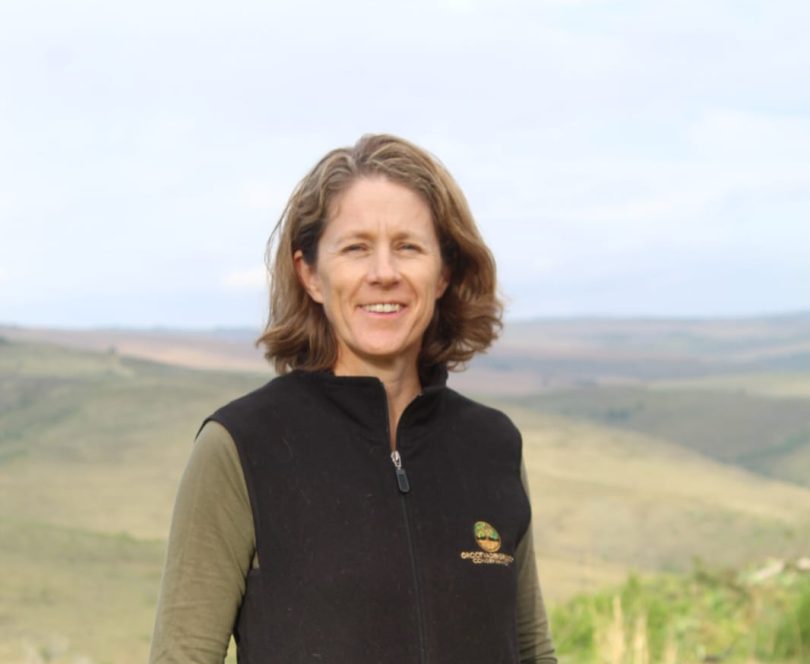
Aileen Anderson – Grootvadersbosch Conservancy: General Manager – ‘Water Warrior’
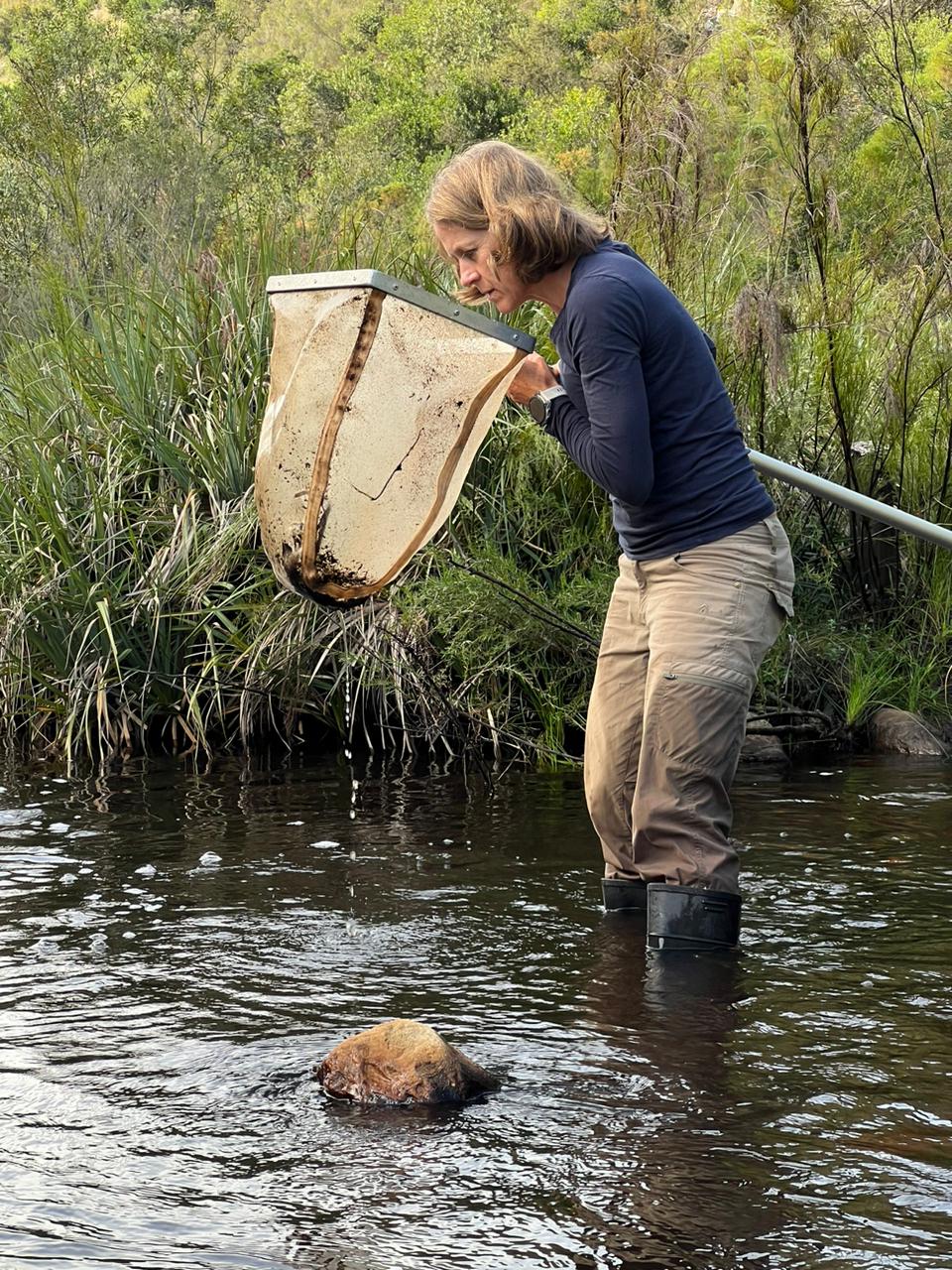
Aileen Anderson leads the Grootvadersbosch Conservancy [GVB] a non profit trust between Heidelberg and Suurbraak – protecting approximately 25,000 hectares of critically endangered flora, mountain catchments, and patches of indigenous forest along the Langeberg Mountains near Swellendam in the Western Cape. A Chartered Environmentalist and a member of the Chartered Institution of Water and Environmental Management; she has over 25 years of experience in the water sector in Southern Africa and is currently managing a project which provides employment for over 120 people in rural areas through the restoration of watersheds. Grootvadersbosch is literally translated as Big Father’s Trees – named after Roelof Oelofse, the owner of the land in the 1700s who was known as ‘groot vader’ (big father) in the community. Before this conservancy formed its natural areas were threatened by agricultural expansion, overgrazing and poor fire management.
Having studied at the University of Cape Town, the University of British Columbia and the London School of Economics; put together her enviable ‘letter soup’ of credentials (MCIWEM C.WEM CEnv) form a recognised gold standard for specialists in water and environmental management. Despite her academic prestige, she modestly insists that she’s learned much more from people on the ground and that her presence and involvement in doing the hard physical work of clearing invasive alien plant species has taught her a lot about the job.
As the General Manager at GVB, Aileen has oversight over the whole organisation and its projects, with fundraising and writing proposals being a significant part of her duties. On average she has around six to eight contractors that are kept busy with alien species clearing work such as the removal of black wattle, blackwood and pine that grow aggressively in the region – including running smaller conservation projects such as an indigenous restoration nursery, environmental education and river restoration, “with the support of an amazing team of 10 staff,” as she took care to emphasise the team effort.
When asked what drew her to studying water resource management she said, “All my life I’ve been interested in water. I like to see things from different perspectives, and water cuts across various disciplines – such as legal, social and economics – as it does landscapes. What I have found the most interesting is that while we focus on protecting rivers and ecosystems we have also worked with people in the agricultural sector who may not appear to be conservation-minded, but who change their perspectives once you start talking about water. When the future of your farm depends on the flow of a river, it reifies conservation as a material necessity. While there is a tension between agriculture and biodiversity conservation, at heart the long-standing farmers really do care about their soil and their land, and their dependence on nature – as opposed to others who just pretend to care and merely talk-the-talk.”
“Many of the farmers around the conservancy are there because they care,” says Aileen, with her mother’s side of the family farming locally for five or six generations. While she didn’t grow up around GVB she has been visiting all her life, nurturing her insights on the region. She notes that one of the greatest challenges of conservation is that you need to be thinking in decades, not months or a few years, to make a difference. “It’s also important to look back at how far you have progressed. When you start doing alien clearing you inevitably just see the alien plants instead of the natural flora, and sometimes I have to stop and remind myself how much worse it looked when I was growing up and when my father began clearing wattle 20 years ago,” she shared.
Aileen advocates for the value of getting work experience before pursuing academia: “Conservation is not learned in a textbook. When looking for a new team member I prefer to interview someone who has life experience rather than someone with a Masters degree or a PhD. If you are going into practical conservation the academic background helps, but first-hand work is indispensable. It doesn’t need to be in conservation; I’m more interested in individuals who – for example – have been waitressing or running a bar, working with people and money, and building real life skills. Those are the stories I want to hear during an interview.”
Addressing women seeking to enter conservation work, Aileen commented “I think sometimes we create barriers for ourselves by self-doubt and belittling our own gender, instead of accepting that those barriers shouldn’t be there to begin with. Women are capable of doing anything we set our mind to. In my work I treat students equally, from climbing up mountains to operating chainsaws, giving everyone the same opportunity, not presuming one is weaker than the other, and supporting them in what they are passionate about.”
Touching on the efficacy of nature conservation South Africa, Aileen opined that as government organisations struggle to fulfil their roles and mandates due to low funding, NGOs are increasingly coming together to solve problems with synergies between organisations to take on challenges – creating employment and opportunities in areas linked to conservation, giving pride in protecting the environment and educating the next generation. “Whereas in previous years conservation was seen as elitist and fenced off, today we are seeing better integration into rural communities and agricultural operations,” Aileen noted.
“The government can help by focussing on creating an enabling environment for conservation organisations by improving the efficiency of permitting processes and providing scientific support, making the work that we do easier. Many agencies focus on tourism because they lack funding. On its face it seems like a good idea because it brings in money, but it also comes with costs, and then the emphasis is on the touristy areas that look visually appealing to travellers – not necessarily on other important conservation priorities that are less visible,” she added.
“We need to protect the natural environment, not just because it looks lovely, but because we are heavily reliant on what nature provides. It’s not just about having beautiful places, the work that we as conservationists do is about protecting communities, future food sources and water sources – all intertwined inseparably with the natural environment,” Aileen concluded.
Linda Fletcher – Gouritz Cluster Biosphere Reserve: Sustainability Manager & Acting CEO – ‘From Corporate to Conservationist’
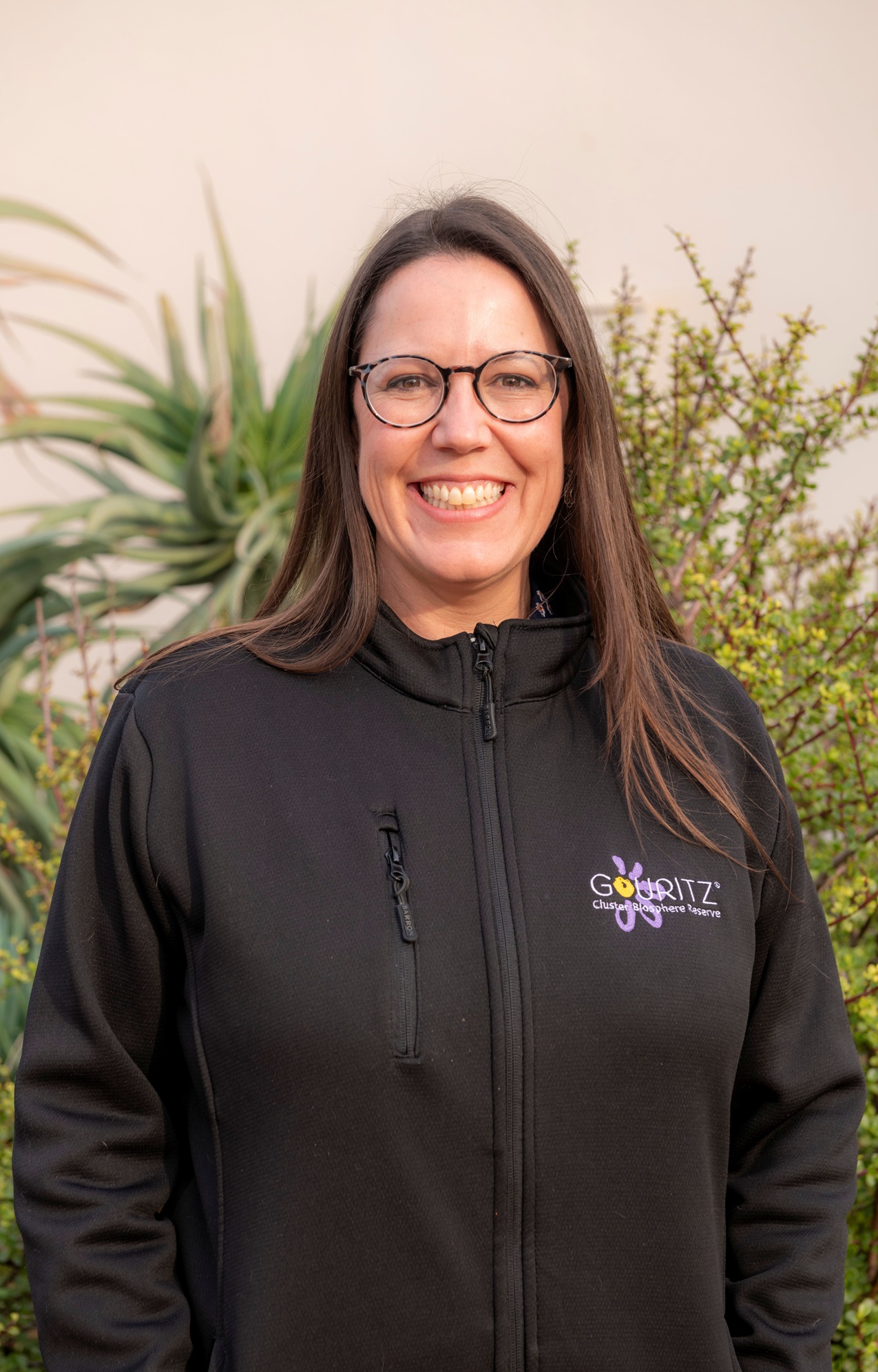
Linda Fletcher is in charge at the Gouritz Cluster Biosphere Reserve [GCBR], a non profit organisation managing the eponymous UNESCO biosphere reserve located across parts of the Western, Southern and Eastern Cape of South Africa. The reserve, South Africa’s largest – spans an immense 3,187,893 hectares – including three recognised UNESCO World Heritage Sites: the Swartberg Complex, Boosmansbos Nature Reserve and Baviaanskloof. It is the only place in the world where three recognised global biodiversity hotspots converge, namely Fynbos, Succulent Karoo and Maputaland-Pondoland-Albany. The site is characterised by a high level of plant endemism with 1,325 endemic species, including 182 Succulent Karoo endemics and 92 IUCN Red List species – out of the approximately 5,000 plant species present in the reserve. Despite its rich biodiversity, the area faces deep-rooted socio-economic challenges; including high unemployment, poverty, sprawling informal settlements with inadequate services and growing crime.
Born in Zimbabwe, Linda grew up around Middleburg in Mpumalanga – while going back to Zimbabwe for holidays to Victoria Falls, wild areas and game reserves, exploring and absorbing raw nature. With her grandparents living in Plettenberg Bay, her field excursions inevitably brought her to the Garden Route area of Wilderness with its dense indigenous forests, reinforcing her connection to nature. After studying Business Administration and Management she moved to Pretoria, and finally made a bold move down to Sedgefield in the Western Cape – setting the stage for her recruitment into the GCBR in Riversdale.
Reflecting on her earlier work, Linda noted, “I come from a very different space. My career started in law, then financial services and then into sales, with 13 years spent in sales and operations management in Fortune 500 fast-moving consumer goods [FMCG] organisations. Though I have a very corporate background, I’ve had a love for nature since childhood. Stumbling across GCBR, waltzing in at first as a volunteer was life changing and opened a path to something that was truly a passion. At first I was worried that I lacked technical conservation expertise, however I soon realised that the community is already full of know-how and my corporate perspective brought in a necessary yet underrepresented skillset.”
“As I got older, I felt a need to serve the environment. Back in the corporate world, I was that annoying person in the boardroom constantly asking about what we’re doing for the planet, or pushing to implement sustainability and green practices,” she continued.
Speaking on her initiatives at GCBR, Linda commented, ”I noticed that while the scientists and conservationists were talking amongst each other, nobody was communicating about their work to the man on the street, and so I set out finding ways to bring people into the conservation conversation and start changing hearts and minds. That’s when I came up with the now-annual Inheems Art Festival, to serve teenagers in the area where no local high schools have art as a subject, drawing their attention and creativity into nature.”
“Next I started the Friends of the Biosphere Programme, crowdfunding from big-hearted local businesses to help with restoration work, including providing small grants to other organisations and partners in the sector. We know that there are many individuals and groups of people doing voluntary work for the environment, and that with a bit of financial support they could make an even greater impact. We also know that there are many businesses who want to give back to their community, and this programme connected these two groups in a structured and meaningful way; empowering communities to take ownership of their environmental future with support from the business sector.”
Asked about her broad views on South African conservation, Linda replied, “Our sector has so many intelligent people, who are doing such good stuff. What we are doing in the Western Cape protected areas expansion plan is making the process simpler for landowners to engage in voluntary stewardships, incorporating OECMs for the in-situ conservation of biodiversity and contributing to the ‘30 by 30’ global biodiversity framework targets. The amount of constructive collaborations that exist in the space is really good – but there are gaps in capacity, research and financing. It’s important that we bring the community along with us, while cultivating an inter-agency culture of shared success. We don’t want to end up with ‘paper parks’ that exist officially but where conservation work isn’t implemented – and that’s why we need to shift away from rivalries over a scarcity of funding and embrace an abundance mentality; for all biospheres, reserves and parks.”
“South Africa has good policies that are not necessarily implemented, and there is a challenge in bridging the implementation gap. This is where we need to create partnerships to get the job done – improving policies and streamlining bureaucracy to make it easier for the government and its agencies to help organisations doing the work. Cities are built out of hard infrastructures, but we also need to think about our ecological infrastructures that provide vital services such as clean drinking water – doing the necessary work to restore and maintain them – remembering that the taps in our homes begin far out in a mountain catchment area,” she continued.
On the subject of attracting more ladies into conservation careers Linda observed, “The space needs more women, and more women are making contributions while being valued in this arena. There are women who have been pioneer conservationists in our landscapes and have paved the way for us. Gender-inclusivity is a natural evolution within the sector and it is amazing to see young women emerge as leaders in the work that we do. Conservation has shifted away from fortress conservation and today it’s more about living landscapes integrated into neighboring settlements and collaborations with indigenous peoples. It’s encouraging to see more females leading the paths toward a more diverse and inclusive conservation community.”
“Nature isn’t just something beautiful to admire; it’s the life-support system we all depend on. Protecting it is some of the most meaningful work we can do, because healthy ecosystems underpin our water, food, livelihoods and wellbeing. The wonderful thing about conservation is that it doesn’t just need ecologists; it needs every talent. Whether your strengths are in science, business, communication, technology, education or leadership, there is a place for you. I didn’t come from a scientific background, yet I found that my skills could make a meaningful contribution. As conservation becomes increasingly collaborative and community-centred, we need more women helping to shape its future. Women are exceptional at bringing people together, building partnerships and leading with purpose, qualities that are essential if we’re going to tackle the complex environmental challenges ahead. Find the intersection between what you love and what the world needs. If nature is what you love, don’t be afraid to bring your unique skills to conservation – the sector needs them more than ever,” she concluded.
Dr. Christina Mars – Still Bay Herbarium – ‘Free-range Botanist’
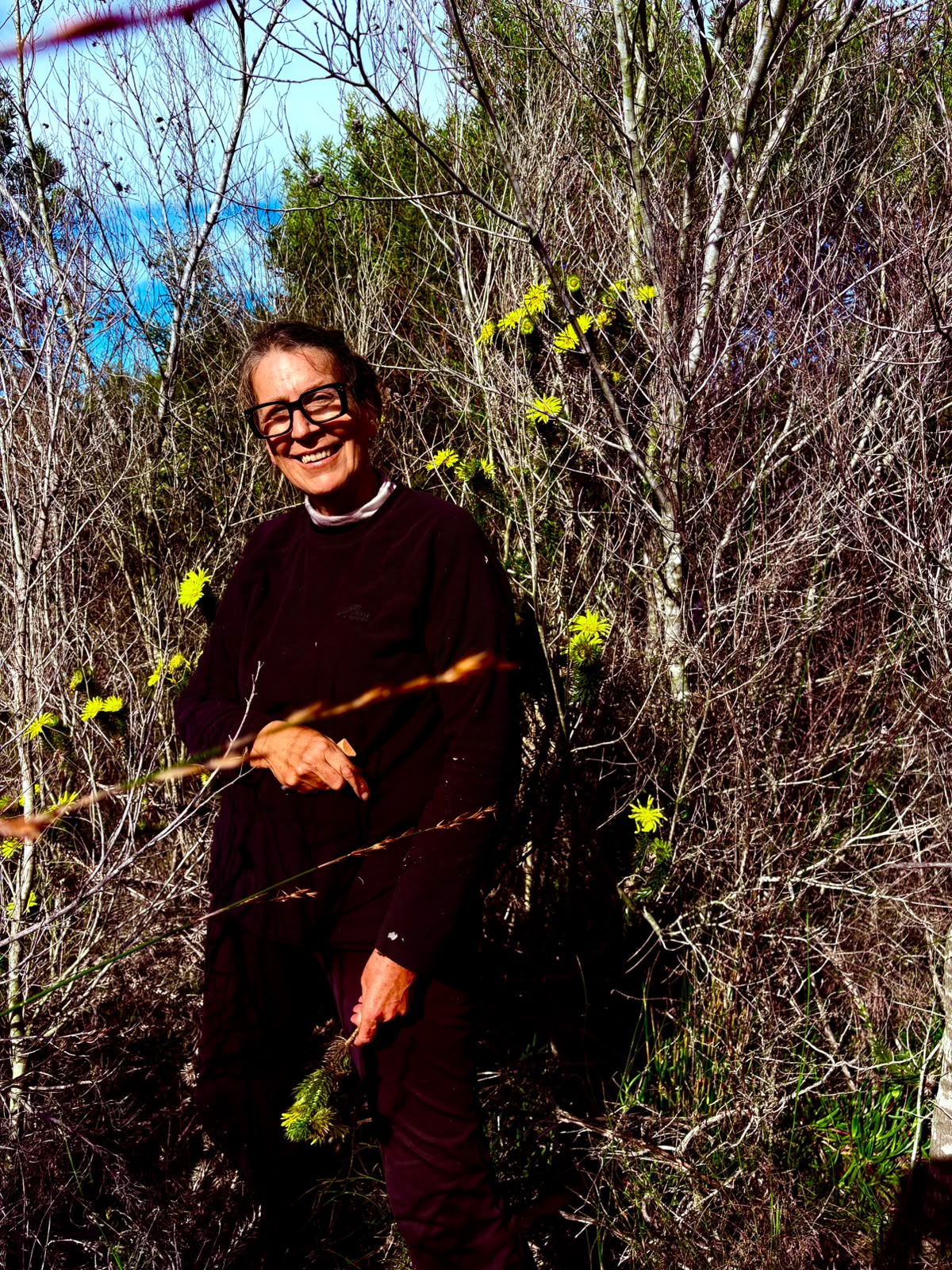
Christina Mars is a preeminent botany expert in the southern Cape, and a champion of the Still Bay Herbarium – traversing fields and rough terrain in the fynbos region while recording and studying indigenous plant species. An active conservationist, she is well-known for her exceptional knowledge and profound understanding of local flora, her research collaborations focused on native ecosystems and coastal vegetation, and her community-focussed botanical walks through local conservation areas like the Pauline Bohnen nature reserve and the Werner Frehse nature reserve. She is affiliated as a research associate investigating coastal palaeoenvironments and indigenous ‘veld’ foods with the African Centre for Coastal Palaeoscience, and regularly contributes to regional conservation initiatives, including biodiversity education alongside the Gouritz Cluster Biosphere Reserve.
An immigrant to South Africa – Christina grew up in the Swiss Alps wandering the mountains, enthralled by the area’s natural beauty and floral variety. In a life journey that embodies polymathic diversity; while in France she earned a Bachelor’s Degree in French Language and Literature, followed by a PhD in Political Science and Mandarin, and then a curious segue into investment banking in England. Having decided that the world of academia and the formal setting of teaching in a university auditorium is not for her, she made her way to South Africa with her husband who had spent his childhood revelling in the surf around Still Bay. Based in Stellenbosch at first, they ultimately settled on the south coast due to their love of the outdoors, and the feeling of safety and freedom in the area.
It was then that her fascination with botany took root. “I first started studying plants 26 years ago when we moved to Still Bay and I needed to do some home gardening. I didn’t have much expertise at the time, but I knew I wanted to have an indigenous garden as our place was near the Skulpiesbaai nature reserve. It was then that I started volunteering at a local indigenous nursery to gain experience – run by Dr. Uys de Villiers ‘Tol’ Pienaar, a prominent South African conservationist, biologist, and former Chief Director of SANParks – along with his wife Annette who had retired to Still Bay.” In 2017 Christina was introduced to an established Still Bay botanist Naomi van Schalkwyk during a paleoscience excursion, and in short order they decided to start a herbarium together – to keep a thorough record of locally-occurring plant species. “Our herbarium really began to take shape around 2018 with all the plant samples that we had collected and in gaining permission to survey nearby farms,” Christina said. “These days things have gotten a little easier with the use of artificial intelligence in helping identify known plant species,” she quipped.
A regional proponent of the Custodians of Rare and Endangered Wildflowers [CREW], Christina has kept up efforts to count species numbers and locations year after year, from fields to mountains in the Western Cape, including the tallying of endangered plants. Her hard work at the herbarium has contributed vastly to their 5,000 samples of plant species that have been collected, identified, pressed and dried for preservation.
Christina urged people to scrutinise their own backyards, “Almost half of all alien plant species are escapees out of home gardens. One should avoid planting something just because it looks pretty. Instead you should check the lay of the land with regards to endemic species and take care to plant indigenous gardens, which would also be better adapted to local climes and soils. Some of the most troubling invasive species found in the wild today came out of residential areas.”
Musing on challenges in our national conservation Christina said, “I don’t think all of our agencies are functioning that well together. Non profits make offers to do the required work and some municipalities say that they will do it themselves instead, but then nothing much transpires. We need more collaboration across the board, and to stem the loss of experts from our institutions who really know what they are doing.”
“We need to closely monitor that proclamations for our nature reserves, such as Pauline Bohnen, are enacted and enforced – and endeavour to have fractured plots of land near reserves with indigenous plants consolidated into one custodianship or stewardship, to ensure that these are kept safe from illegal logging and plant theft. Additionally, the problem with some of our educational programmes is that we are largely preaching to the converted who already have an appreciation for nature, when we actually need to target those audiences who haven’t yet bought into the necessity of biodiversity conservation,” she continued.
On the topic of empowering women to enter the botanical sciences Christina remarked, “Making observations is the most important thing and for that you need to get in the field yourself and have a look around, building up your knowledge through practical experience rather than just researching on the internet.” “Independence is crucial and women should stand on their own two feet without needing the traditional arrangement of having a partner to pay for everything. The freedom to choose to leave an undesirable situation is only earned by taking care of your own finances,” she added as advice.
Naomi van Schalkwyk – Still Bay Herbarium & Tuin op die Brak – ‘Doyenne of the Cape Floral Kingdom’
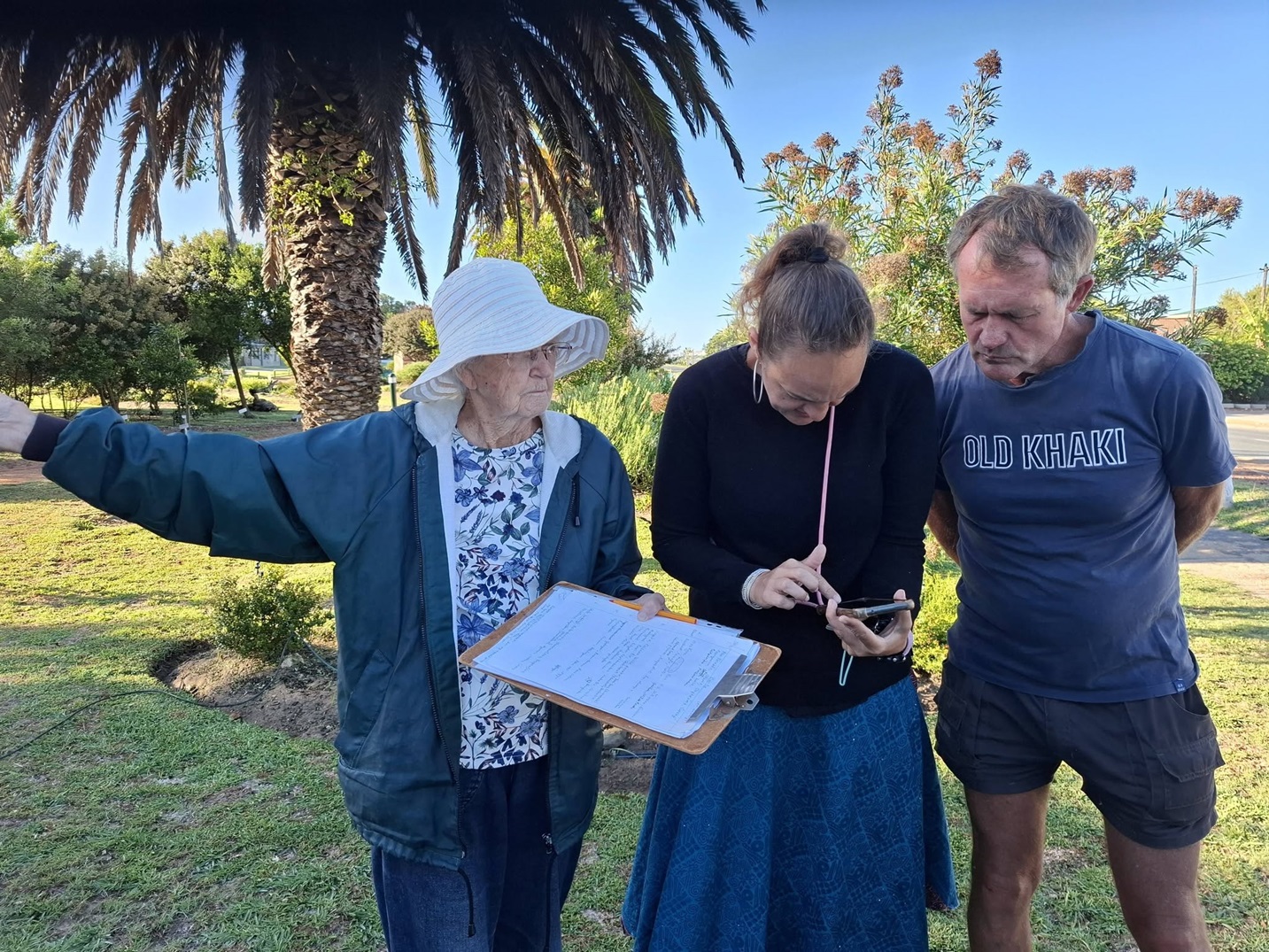
At age 86, soft-spoken Naomi van Schalkwyk has earned the respect and esteem of those in the Hessequa region as an expert in indigenous botany and fynbos conservation. The humble octogenarian is widely known in the Still Bay community for her efforts in identifying and preserving indigenous species at the herbarium, and educational programmes at the landmark Tuin op Die Brak fynbos park, which she jointly curates.
Matriculating in Bellville, Cape Town; she earned Bachelor of Science degree in botany, zoology, mathematics and chemistry at the University of Pretoria – later teaching at the University of Potchefstroom before working for two years at the National Herbarium in Pretoria. In the early days of her career, distant from the south coast, she worked mainly on woody plant species out of Mozambique and Swaziland, furthering her interests in the genus, noting that she rarely had anything to do with fynbos at the time as these species are largely endemic to the Cape region and certainly weren’t a feature of the old Transvaal.
Retiring in 2005, her property in Still Bay was bordered on either side by the Pauline Bohnene nature reserve, enhancing her exposure to the local biodiversity. And so, when then the residents’ association eventually leaned on her botanical expertise and asked her to beautify a piece of land next to the main street in town; she insisted that it be done exclusively with indigenous plants. As she watched formerly dense growths of indigenous plants such as proteas, pincushions and cancer bushes dwindle under pressures of olive tree plantations; the result was the establishment of Tuin Op Die Brak (‘garden on the brack’) named for growing on the region’s distinct brackish, limestone-rich alkaline soil.
Naomi said, “At the start there was an older herbarium with around 2,000 samples collected that was given away to the Compton Herbarium at the Kirstenbosch National Botanical Garden, which we were not able to reclaim. With the help of Christina Mars we are able to begin a new herbarium which is still a non profit organisation, surviving monetarily by the sale of cultivated plants and by donations.” “We’ve also advocated for the implementation of stringent environmental impact assessments on new building developments in the area, campaigning against construction efforts before these aspects have been diligently examined,” she continued.
In the intervening years she wrote a volume titled The Layman’s Guide to Common Trees of Hessequa, pointing out that “Hessequa” is in fact a Khoi word meaning “people of the trees”, indicating that forests were historically much more common in the region – before the land was denuded by agricultural practices and urbanisation, and beset by invasive alien plant species. She also wrote a book titled Fynbos for Stilbaai Gardens, stating vehemently that “if something grows on the ‘brack’ then that same thing will grow in people’s home gardens.”
Asked about her ideas on conservation she shared, “Keep in mind that Hessequa is the smallest subdivision of limestone fynbos in the overall region and a centre for these specially-adapted indigenous species, with a high degree of endemism in a small, concentrated geography. That’s why our plants are so important, and why endangered species among plants that occur only here is such a significant concern.”
“We have to remember that when it comes to biodiversity we can never get back what we lose. When a plant species goes extinct then we simply won’t have it anymore. We have to save what we can’t get again and it’s much better to safeguard species rather than to allow them to be ruined. A lot of human development is happening in certain parts of the Western Cape and even in our own town we have to try and limit especially coastal urbanisation – where we can witness the progressive eradication of indigenous growths.”
Speaking pensively on changes she would like to observe in our perceptions of nature she said, “I just wish there were a lot more people who have a passion for our plants. Our flora is unfortunately unnoticed by so many who otherwise enjoy seeing big game animals such as lions and elephants – though we should save a thought for the fact that plant life underpins everything and these large animal species would not and could not exist without the ecosystems that support them. I would also like to see more sympathy for the value of conservation work and funding flowing into this sector.”
“There are six floristic regions in the world and the five large regions of these each stretch over more than one continent. The smallest by far is the Cape floristic region, the only one contained on a single continent and relative to our surface area we have the most biodiversity – making ours such a unique place, and people don’t realise what treasures we have here. For the governments of the past, conserving our indigenous species was not a priority, and there is a lot that remains to be done and improved, such as appealing more to international visitors to delight in our beautiful fynbos and not only the famous fauna,” she continued.
“As for inspiration,” she opined, “conservation is not necessarily a high-paying career, but it enriches your soul beyond any doubt, making you realise the wonders of nature and the incredible way in which ecosystems fit and function together. We are all connected when it comes to nature. We all need to learn our place and a single individual person is not that important in the grand scheme of things. We, as humans, do not sit on the throne of creation. If you open your heart to nature it will be very rewarding. Comparable to the fulfilment of watching a child grow into a mature adult, the work of a gardener is never done until the seeds that were planted grow taller than you are.”
Gill Simpson – Founder & Director: Wild Rescue – ‘A South African Jane Goodall’
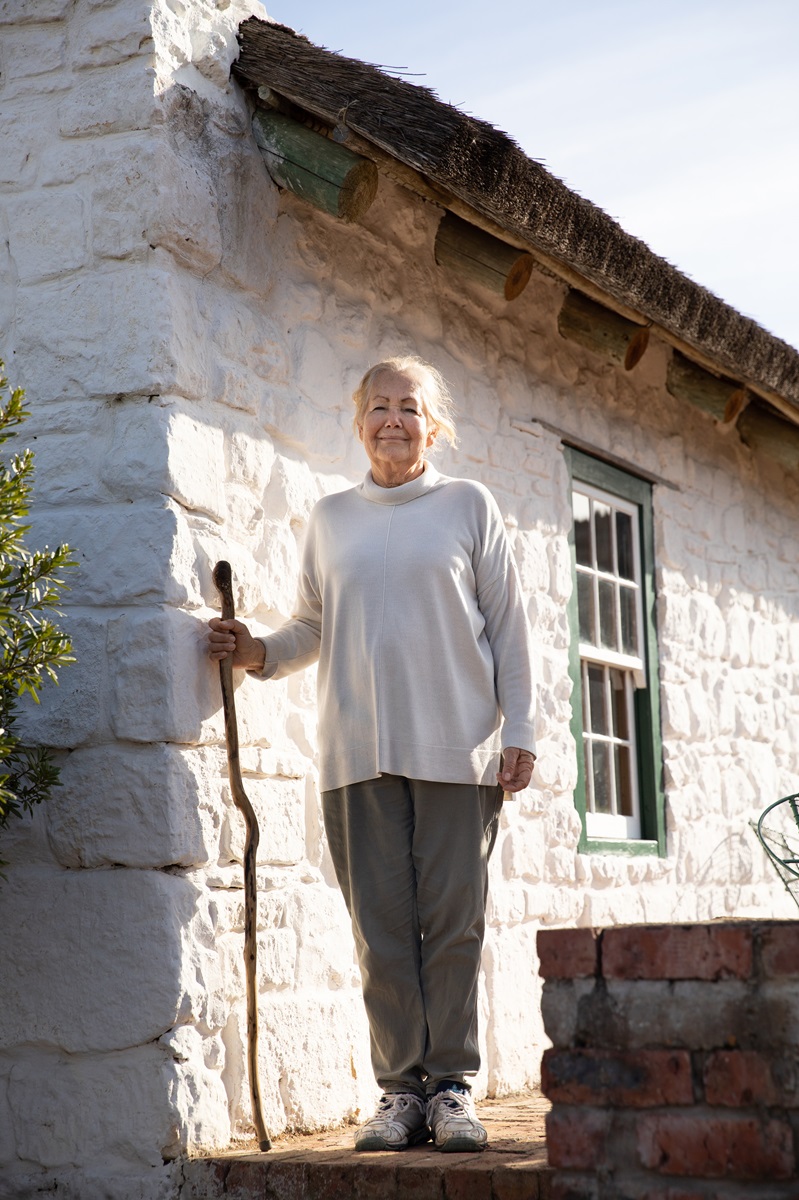
Gill Simpson directs the Wild Rescue nature reserve near Riversdale in the Western Cape. Now in her early 70s, both a teacher and marketer; she enjoyed a successful career as a senior strategist and manager in the advertising industry whilst continuously being involved with NPOs for wildlife and animal rights. She speaks plainly on having invested her whole life savings into conservation.
“When I started Wild Rescue I wanted to actually rescue baboons, having come directly from the Jane Goodall Institute / Chimp Eden in Mpumalanga I was inspired by Dr. Goodall and realised how immensely important habitats and ecosystems are, and how these are inarguably linked to the conservation of larger animal species,” she began.
“Orignally I set out to buy a piece of land on which to start a primate rehabilitation centre and sanctuary, however the best property I saw around Cape Town and the area was this particular property which happened to be a nature reserve. I met the owner Hannes Zaaiman who realised I appreciated the fynbos biodiversity, though I had little actual knowledge about it. Unfortunately Hannes passed away during the interim when I left to come back to him with an offer of purchase, but it was accepted by his estate as they were mindful of leaving the place in good hands. That is how I came to be the custodian of a private nature reserve of 165 hectares in the hills of Hessequa, and I feel very privileged to be here.”
Gill continued, “A nature reserve belongs to everyone and everything, not an individual or to people. Our area is amazing in its biodiversity, from fungi to birds and mammals – the more you learn the more you realise how inter-reconnect things are – way beyond just fauna, which is my great love. After 10 years on site we are still battling to open up the rehabilitation centre due to the costs involved – such as construction, medical equipment, permitting and compliance with regulations by CapeNature. Currently in our sanctuary we have 29 leopard tortoises and 2 vervet monkeys who have all been saved from certain death, but the main objective is to rehabilitate and release wild animals back into nature, and only in saving wild places and habitats can we make this happen and retain our biodiversity.”
Speaking about her journey towards becoming a steward of a nature reserve she said, “I have always been very interested in wildlife, however in the 1970s I travelled through Africa and was not aware at the time that buying ivory was wrong. When I returned home I became a lot more conscious of issues around poaching and habitat loss. Then I was doing my teaching degree and decided to teach geography and business economics as a means to influence environmental matters. I finished my post graduate degree in marketing management while working as a receptionist in advertising, and was offered a job in marketing and communication. During that time I worked with big creative agencies and eventually the prized Shoprite account. While it was highly stressful, the money did enable me to buy a nature reserve.”
She continued, “I got onto the path of working with wild animals, serving on the board of Beauty Without Cruelty for 20 years, encountering these laboratory animals as they were trapped and experimented on. I also went as a volunteer to the Barrydale Baboon Sanctuary, working with Dr. Peter Fraser and his wife, Nola Fraser. However, it was only when I went to a Jane Goodall talk at Kristenbosch with Baboon Matters that I decided to volunteer at the Jane Goodall Institute near Nelspruit, and it was only because of that experience that I ever thought that I could possibly start a sanctuary in the Western Cape – where there was and still is desperate need for such facilities.”
Expanding on ideas about conservation Gill said, “It has to involve biodiversity and habitats, and it has to involve people. Nature conservation is very much about teaching people awareness of the value of biodiversity and how precious all the elements are – right down to the plants, insects and microbes. Shifting toward plant-based diets will help prevent biodiversity loss by drastically reducing resources needed for agriculture and greenhouse gas emissions, allowing natural habitats to recover and protecting wildlife. Commercial farming with its heavy use of chemical fertilisers and pesticides need to change to more sustainable models. There is hope, but we cannot continue on the trajectory we are on now.”
“South Africa does not give enough importance to conservation. We allow economic motivations to override both scientific findings and indigenous knowledge. The environment needs more protection, not less – and so do animals. Conservation is an underfunded sector and we know that the future of every country is dependent on limiting climate change. South Africa does have beautiful parks, but there isn’t enough follow-through with people who break the law, such as with poaching. We have such rich biodiversity in every single province, which is enviable, and it is one of our most precious assets.”
“In South Africa we need to give more priority to the animals and other constituents of our biodiversity which are not just the ‘big five’ charismatic species, and care about the fact that there are also other species that will become endangered unless we take action now. If we continue without acknowledging every animal, bird and plant; almost every species will become endangered or lost unless we recognise their value. There is a lot of red tape involved in doing conservation work with little to no financial aid. Regulations need to be enforced and implementable,” she listed.
“Everyone has a right in our constitution for a healthy environment, and therefore the protection of the environment is also for the sake and benefit of people.”
Commenting on women in conservation, she exclaimed, “Come! We need you!” Continuing, “Nature conservation is an area where women can progress and where women should get involved in, particularly since they can have the nurturing side as well as a scientific approach. Anyone interested in entering this field should volunteer with an existing organisation and become involved. You can make a difference. We need people to go out – pick up litter, remove alien plants, form organisations to protect animals, we need people to make a positive difference, no matter how small. Women are in a special position to give their children an awareness of the broader aspects of the environment, and let them experience it. Nature is reality – it is a lifestyle, it’s a cycle, and you need to be a part of that. Children should also be a part of that and be allowed to get their hands dirty and learn.”
Concluding on changes she would like to see within her lifetime Gill added, “I would like hunting to be banned, as I’m against trophy hunting. It gives people the impression that they are separate from and superior to the environment. That they are better than the animals that they harvest as trophies. It’s a total sign of disrespect and disregard for how we are all part of nature. We all come from the earth, and without it we cannot live. We need better recognition of all animal rights, and get people back in touch with nature. Nature is an inter-linked chain rich with biodiversity; if we allow species to become extinct, we are taking away your own heritage, they are a part of us, and a part of the same mosaic of life.”
As these conversations underline, conservation is not defined by a single profession, qualification or career path – it is shaped by people who choose to care enough to act. The women featured here remind us that protecting South Africa’s extraordinary natural wealth requires knowledge, resilience, collaboration and a willingness to think beyond our own lifetimes. This Women’s Month, may their stories inspire others to step into the field, lend their skills, support conservation efforts in their own communities, and recognise that every healthy river, thriving landscape and rescued animal is part of a legacy worth leaving to the generations that follow.
With thanks to Wikus Engelbrecht for the words.