
By Wikus Engelbrecht
According to American actor and filmmaker Alan Alda, “Your assumptions are your windows on the world. Scrub them off every once in a while, or the light won’t come in.”
The familiar narrative stating that ‘hunting is a form of conservation’ is about 130 to 150 years old, originating during the rise of the modern sport-hunting and wildlife management movements.

Sport and trophy hunting in South Africa began to emerge as a form of consumptive wildlife tourism and colonial leisure during the 1890s, when organised commercial and sport-focused hunting expeditions directed at wealthy British and international tourists took off following earlier decades of uncontrolled slaughter for ivory and skins.
Today, hunting as a means to support conservation work remains a fraught issue, with no shortage of ammunition on either side of the debate. By now the mantra of ‘hunting equals conservation’ has been reiterated generationally, but a belief does not become a fact simply because we have repeated it often.
As we increasingly realise that the killing of wildlife isn’t automatically equivalent to effective conservation, particularly with the new National Biodiversity Strategy and Action Plan; it is an essential time to reexamine this Imperial Age premise.
South Africa’s wildlife industry is often presented as a conservation success story. Hunting, its supporters argue; generates income, creates employment, gives private landowners an economic incentive to retain wildlife and can provide funding for conservation.
These points deserve shrewd consideration. In a country with limited public conservation budgets and immense socioeconomic challenges, it would be unrealistic to pretend that finances play no role in determining how land and wildlife are managed – but we shouldn’t assume that an activity is automatically good for conservation simply because it generates revenue from biodiversity.
The problem is not necessarily that every claim about sustainable hunting is false. It is that a complicated environmental activity is increasingly being presented through slick public relations vocabulary that makes its benefits sound settled and its costs secondary or negligible. “Sustainable”, “ethical” and “conservation-based” are not scientific conclusions.
They are claims: and like all claims, they should be tested against evidence. The most effective form of washing is not necessarily telling people something that is untrue; it is telling them only the part of the truth that supports a business model – with a polished pitch that doesn’t encompass the whole ecological story.
Can Killing Wildlife Really Be Called Conservation?
A typical version of the hunting debate might look like this: hunting generates money and money supports wildlife, therefore hunting equals conservation. But we may also ask how much of the revenue actually goes directly into conservation? How much reaches local communities? What proportion becomes private profit?
Does the activity protect or restore entire ecosystems, or primarily commercially valuable species? Are less profitable species and ecological processes benefiting, and how? Are wildlife populations being maintained in genuinely natural and ecologically functional systems? What are the long-term genetic and behavioural consequences of selective “harvesting”?
A hunting operation may generate substantial income while producing relatively limited benefits for biodiversity as a whole. In some circumstances, it might even create incentives to manage ecosystems around trophy animals rather than ecological integrity.
In this way the word “conservation” becomes attached to the activity merely because wildlife is involved and money is generated – rather than because demonstrable positive conservation outcomes have been independently established.
With “sustainable hunting” a population might survive while its genetic diversity declines, species maturity structures become warped, social organisation is disrupted and ecological behaviour is altered detrimentally – and these effects may be particularly relevant when hunting animals with specific characteristics (or phenotypes) – such as large tusks, horns, antlers or other desirable physical traits.
South Africa’s own assessment of intensive and selective game breeding identified significant potential risks to biodiversity at landscape, ecosystem and species levels. It warns that some forms of intensive management and selective breeding could ultimately compromise the wildlife industry’s contribution to conservation.
Breeding animals as a taxidermist’s delight is fundamentally different from maintaining naturally functioning wild populations. The assessment found potential risks associated with inbreeding, reduced genetic diversity, disease and parasite resistance, movement of genetically altered animals, and changes in land use.
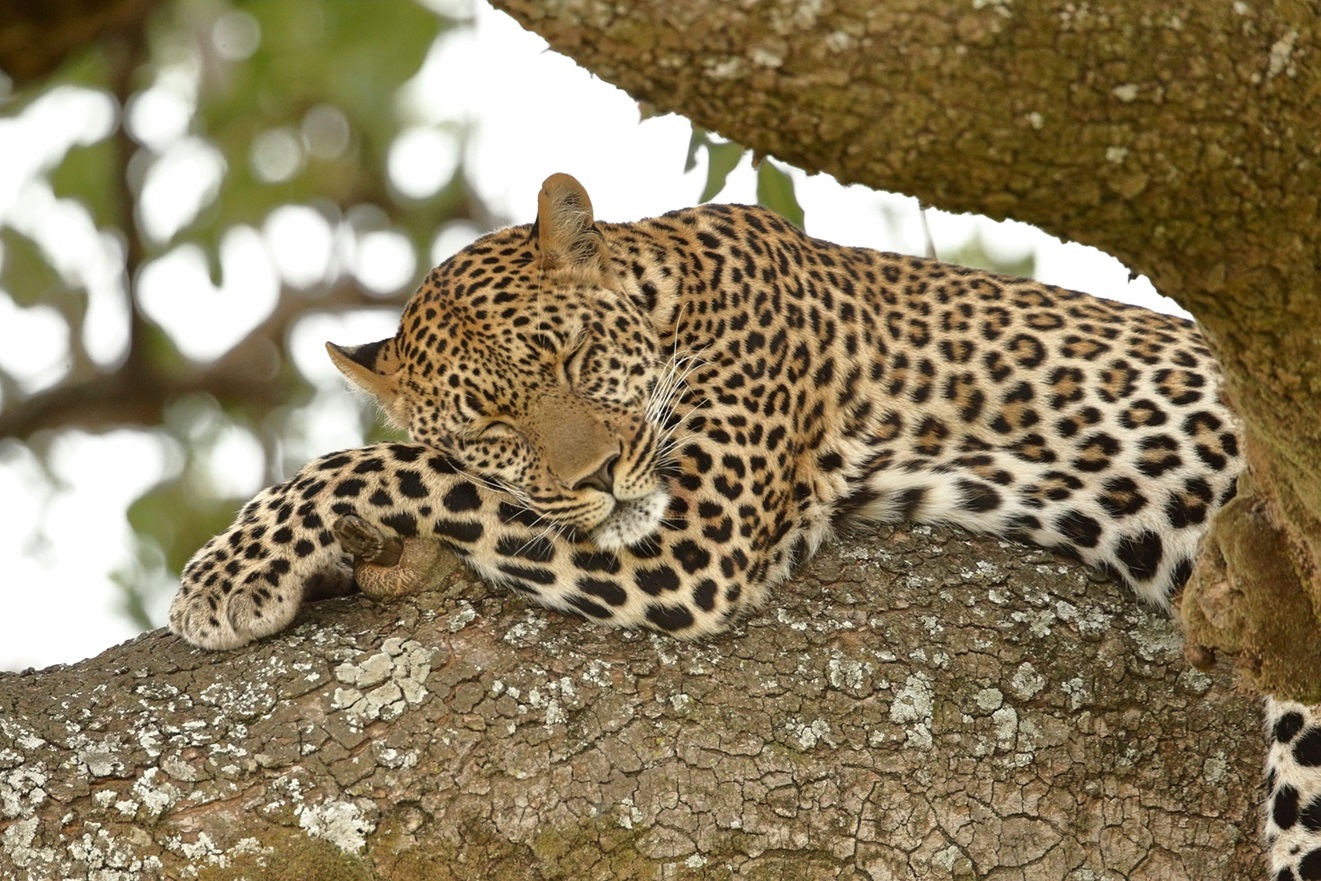
It concludes that intensive and selective breeding may not meet the definition of sustainable use where biodiversity is concerned. The report was commissioned following concerns raised to scientific authorities about the rapidly expanding practice of intensively and selectively breeding game for commercial purposes.
It distinguishes the broader wildlife economy from the newer practice of intensive and selective breeding, which it identifies as presenting potentially significant risks – complicating the claim that commercial wildlife utilisation automatically benefits conservation.
Similarly, an individual hunting quota may appear sustainable when examined in isolation; but have more complicated consequences when combined with habitat fragmentation, climate change, drought, poaching and declining population connectivity due to human development.
True sustainability requires examining the entire system, not simply establishing that a particular number of animals can be removed this year without causing an imminent population collapse.
To suggest that hunting is inherently synonymous with conservation is to grossly oversimplify an intricate ecological issue. The scientific literature does not provide such a convenient deduction.
A major 2021 review of more than 1,000 studies on recreational hunting found extensive research on the ecology of sustainable hunting, but comparatively little evidence about the socioeconomic and conservation outcomes for local communities. Its conclusion was significant: evidence remains insufficient to answer where and how recreational hunting contributes to just and sustainable conservation.
Noting that, “while the literature on recreational hunting is extensive, there are clear biases toward certain continents, species, and topics, and in many cases to species or populations that are not under imminent threat of extinction. The focus on large mammals reflects a common bias in conservation research.
Surprisingly, despite the extensive literature on recreational hunting, the evidence to address some of the most pressing academic and societal questions (e.g., when is recreational hunting sustainable, and who benefits from it?) is still limited.”
Conservation or Commercialisation?
“Conservation washing” and “sustainability washing” provide a useful framework for examining claims about hunting without necessarily accusing everyone involved of deliberate dishonesty. Both can involve selectively promoting certain benefits while giving less attention to potential costs, uncertainties, drawbacks and contradictions.
Economic profitability, a stable animal population or the ability to continue harvesting wildlife do not automatically demonstrate a net benefit for biodiversity or ecological integrity. Vital questions remain about where revenue goes, who benefits, the impacts of selective hunting on animal populations and whether entire ecosystems – not just “cash species” – are being protected.
The controversy surrounding South Africa’s trophy-hunting quotas for elephants, black rhinos and leopards illustrates the importance of these questions. The government has published quotas, but critics have argued that the scientific and administrative basis for particular decisions has not been sufficiently transparent.
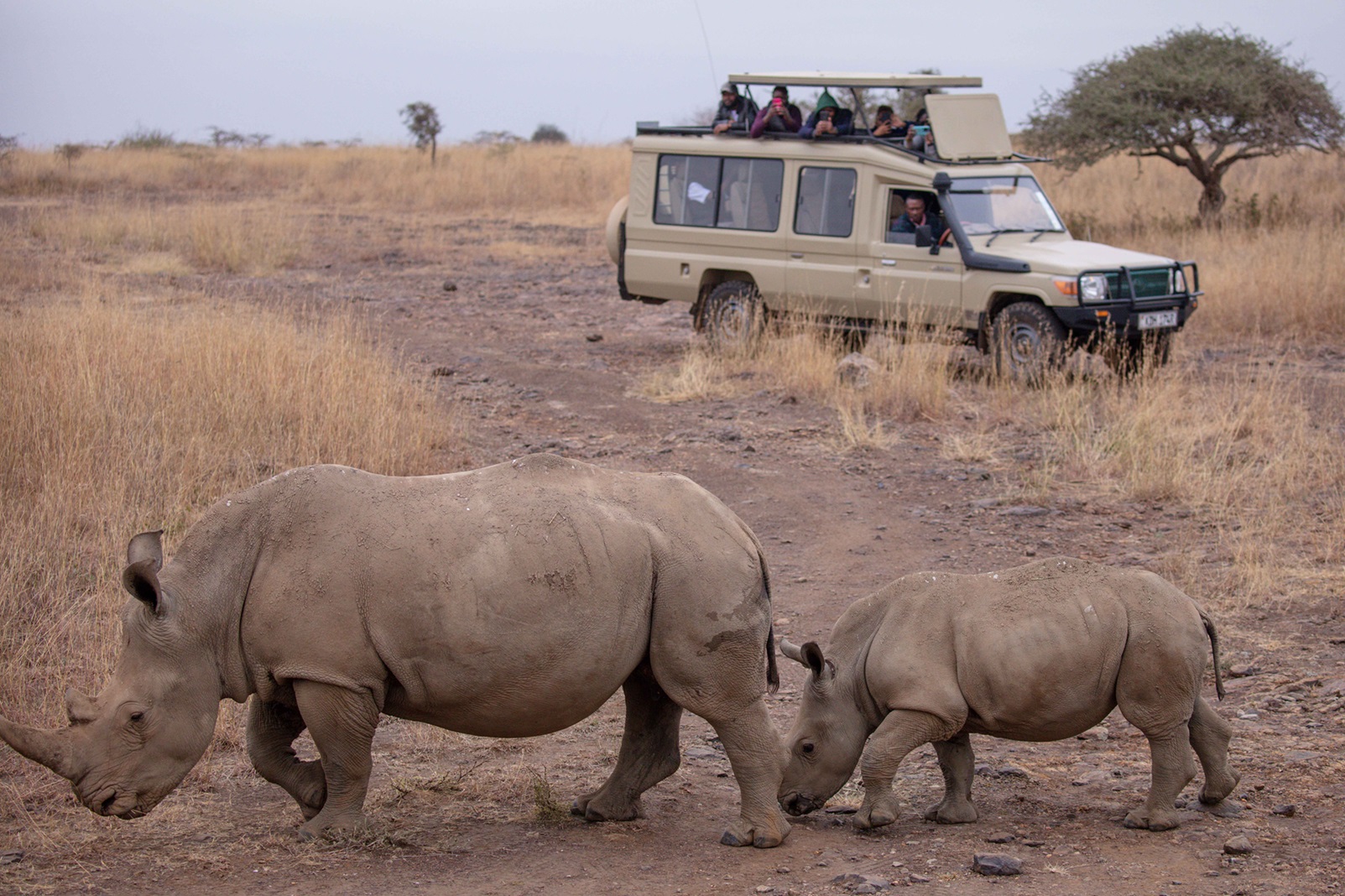
Their concerns include population monitoring, demographic impacts and the scientific assessments required to demonstrate that international trade will not be detrimental to the survival of the species concerned. A national population estimate, for example, does not necessarily tell us everything we need to know about the ecological consequences of removing particular animals from particular populations.
An older male elephant may represent more than one unit in a national population count. A mature leopard may occupy a particular social and territorial role. The removal of a dominant animal can have consequences that extend well beyond the individual itself. The question is: what happens to the ecological and social systems of which those animals form part?
An economy can depend on biodiversity without necessarily restoring or improving it. A landscape can generate considerable revenue from wildlife while indigenous vegetation declines, ecological processes deteriorate or less economically valuable species disappear.
This is not an argument against economic activity in nature: it is an argument for distinguishing between using / draining biodiversity and conserving / regenerating biodiversity. South Africa’s current draft National Biodiversity Strategy and Action Plan recognises that the biodiversity economy includes activities such as tourism, hunting, fishing and harvesting – but the real test for any activity described as contributing to conservation should be whether it measurably maintains or improves biodiversity and ecological integrity.
The wildlife economy is innately extractive, and financial gain is not an ecological indicator.
Good conservation requires transparent evidence. If a hunting quota is scientifically justified, the underlying science should be capable of withstanding public scrutiny. If hunting demonstrably provides conservation benefits, those benefits should be measurable rather than assumed.
If communities receive substantial economic benefits, those benefits should be clearly demonstrated and their distribution understood. Likewise, if hunting creates ecological costs, those burdens should be openly incorporated into the calculation.
Conservation decisions can be labyrinthine. Hunting may produce genuine benefits under certain circumstances while causing negative consequences under others. Economic incentives may protect wildlife habitat in one context while being deleterious in another. There is no single answer that applies equally to every species, landscape or management system.
When Wildlife Becomes a Commodity
South Africa’s biodiversity is too complex and too valuable to be reduced to a simple equation in which financial value equals conservation value. Wildlife can generate income. Hunting can support livelihoods.
Private land can play an important role in conservation. All of these things may be true. Yet the ultimate question must remain ecological. Is biodiversity healthier? Are ecosystems functioning better? Are wild populations genuinely secure? Is genetic diversity being protected? Are landscapes becoming more ecologically resilient?
If the answer is yes, then we may have a genuine conservation success. If the answer is unclear, then financial benefits alone should not allow us to declare victory. Conservation should not be a debate between economics and ecology. South Africa needs both sustainable livelihoods and healthy natural systems.
Beyond the Trophy: Rethinking Hunting as Conservation
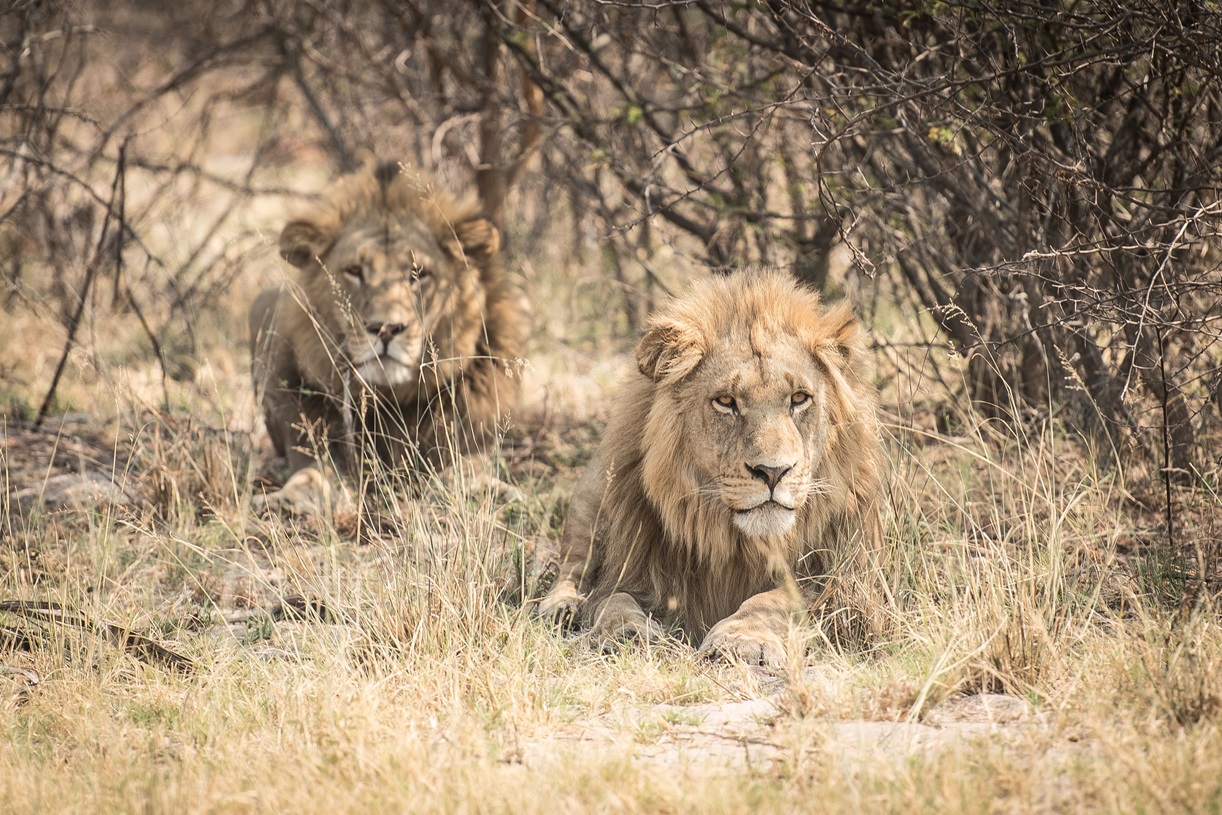
Trophy hunting deserves particular scrutiny. There are key discrepancies between subsistence hunting, harvesting animals for food, population management; and recreational trophy hunting. Treating all of these activities as though they are the same obscures rather than clarifies the debate.
The broader scientific literature has raised concerns about the potential effects of recreational hunting on populations, species and social systems, while also emphasising that outcomes vary considerably according to context and management. This is why blanket claims are unhelpful – both from supporters and opponents of hunting.
Conservation has powerful public legitimacy, and businesses connected to wildlife understandably want to demonstrate that their activities contribute to protecting nature. But when unearned conservation labels become an umbrella justification for an activity, rather than an outcome that can be independently demonstrated; we should be cautious.
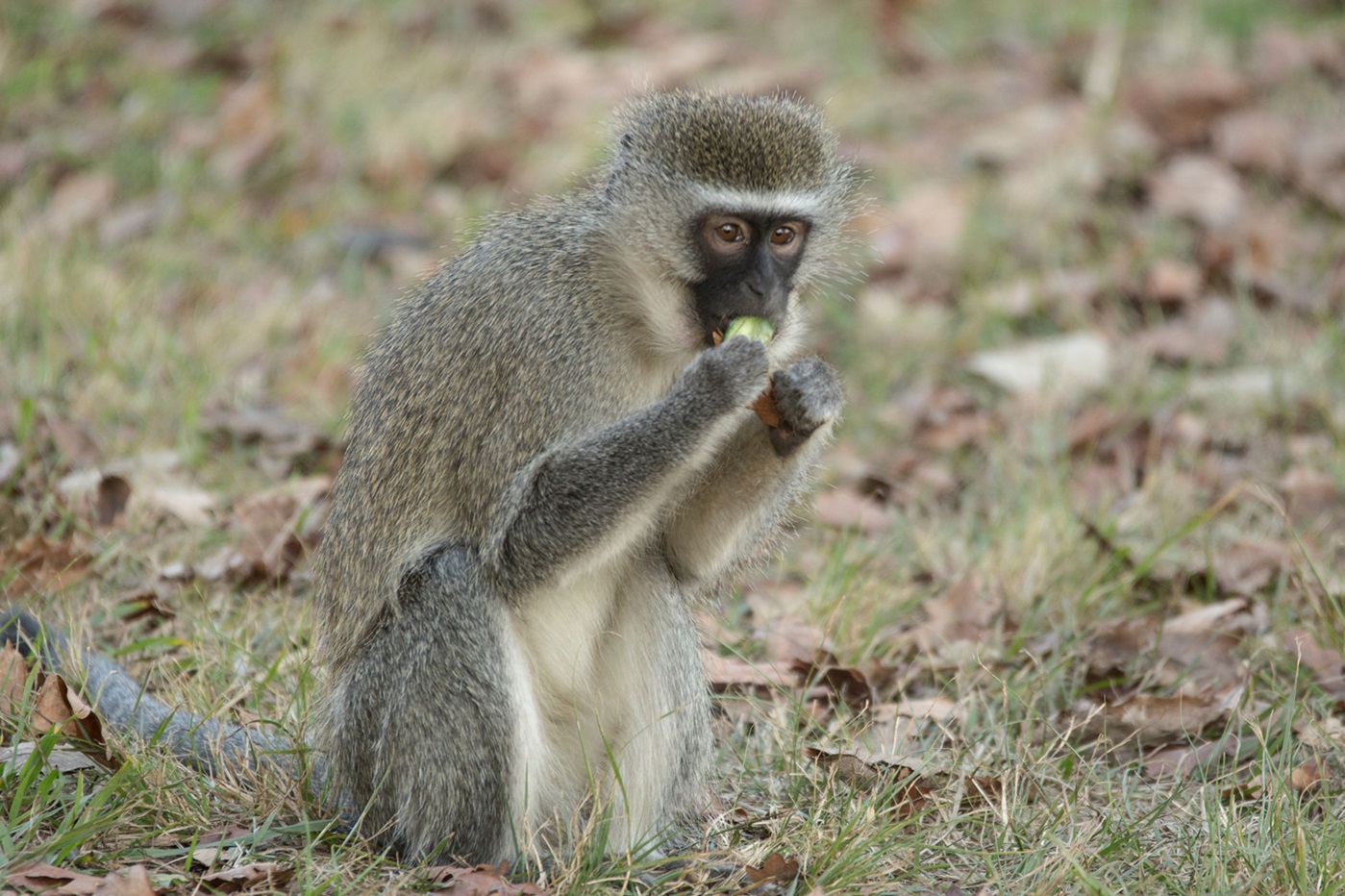
Revelations about South Africa’s international trade in wild baboon and vervet monkey trophies and skulls have raised more scientific and governance questions. According to an examination of government export records, thousands of trophy items and skulls derived from wild primates were authorised for export during 2023 and 2024.
The scale of the trade has prompted questions about population monitoring, the origin of animals entering commercial supply chains and the relationship between wildlife management decisions and international commerce. Again, it is possible to set aside emotional language that often accompanies discussions on primates and focus on a straightforward scientific issue: how can the sustainability of extraction be confidently assessed without sufficiently comprehensive population data? It cannot.
This is particularly important for socially complex species. Wildlife populations are not simply collections of identical biological units that can be added and subtracted from a spreadsheet without consequence. Age, sex, social relationships, reproductive status and ecological roles all matter.
That does not mean every individual animal can never be removed from a population. Nature itself includes mortality, predation and competition. But it does mean that “the population still exists” on a ledger should not be the only standard by which management decisions are judged.
The debate becomes even more complicated when hunting intersects with intensive captive breeding. South Africa’s commercial captive lion industry provides an important example.
Despite years of policy discussions and commitments to phase out commercial captive lion breeding, the industry remains legally operational. Government reviews have raised concerns about risks to wild lion conservation, tourism and South Africa’s international reputation, as well as the potential for trade in lion parts to stimulate poaching and illegal markets.
This illustrates why hunting cannot be treated as one single, uniform activity. There is a substantial difference between the carefully regulated management of a genuinely wild population in an ecologically functional landscape – and an intensive commercial industry in which animals are bred in captivity for various forms of exploitation.
Each activity must therefore be assessed according to its actual ecological, conservation and welfare consequences rather than being granted legitimacy simply because it falls under a broad category of wildlife utilisation.
“100 Proofs” of No Real Proof
Recently The Origins Foundation featured in National Geographic and local media for launching their “100 Proofs” publicity campaign as a storytelling initiative to showcase cherry-picked and dressed-up examples of “the real-world impact of hunting and sustainable use conservation around the world” and various standalone claims regarding what hunting purportedly “makes possible for wildlife.”
However, for all their assertions regarding documenting “real-world examples of how hunting-supported conservation creates measurable impact”; upon closer examination these case studies largely present little to no causal links between the hunting activity and the conservation results cited.
Based on the case studies that were initially published on their website, the central deficiency is that many of these examples demonstrate that hunting money can fund something useful, but do not necessarily demonstrate that killing wildlife is itself a conservation benefit, or that hunting is the best, necessary, or most sustainable way of achieving that outcome.
The biggest general problem: correlation is repeatedly presented as causation. Across the case studies, there is a recurring logical leap: hunters provided money, then something beneficial happened, and then it’s assumed that therefore hunting is conservation – but those are very different propositions.
A duiker being rescued from a snare is unquestionably good. Anti-poaching patrols are good. A school being built is good. Wildlife populations increasing is, generally, good. However none of those facts, on their own, establish that recreational hunting caused the conservation success, that the money could not have come from another source, or that hunting was the most effective mechanism for producing that outcome.
Recreational hunting’s conservation outcomes are highly context-dependent. A 2021 study reviewed over 1,000 scientific papers and found that clear evidence is still lacking to prove where and how recreational hunting supports sustainable conservation and local communities.
Killing for Conservation? The Argument Doesn’t Add Up
The site is explicitly designed to present evidence supporting hunting. Its own description says its mission is to tell the stories of hunting and demonstrate how hunting protects habitat, supports communities and fuels conservation.
That means the collection is not a neutral systematic review of hunting outcomes: it is a curated collection of examples selected to support a particular proposition. That doesn’t make every example false, but it does mean that “100 proofs” is not equivalent to 100 independent scientific demonstrations that hunting is conservation.
A “proof” in scientific discourse operates by much higher and more stringent standards of evidence and reasoning. A genuine assessment would need to include successful and unsuccessful hunting programmes, failed quotas, corruption, inequitable revenue distribution, population declines, genetic impacts, social disruption, alternative tourism models and cases where hunting was discontinued.
Even their own broader resource library contains research acknowledging some of these problems, noting that trophy hunting can involve overhunting, corruption and uneven revenue distribution.
Many of these examples demonstrate that conservation can be funded by money associated with hunting. That is not the same as demonstrating that killing wildlife is itself a conservation benefit. The existence of a conservation benefit somewhere along the financial chain does not automatically make the activity that generated the money a conservation activity.
A Western Cape nature reserve has broken down the initial batch of case studies with an analysis that briefly highlights specific issues, and the evidence needed to substantiate these claims.
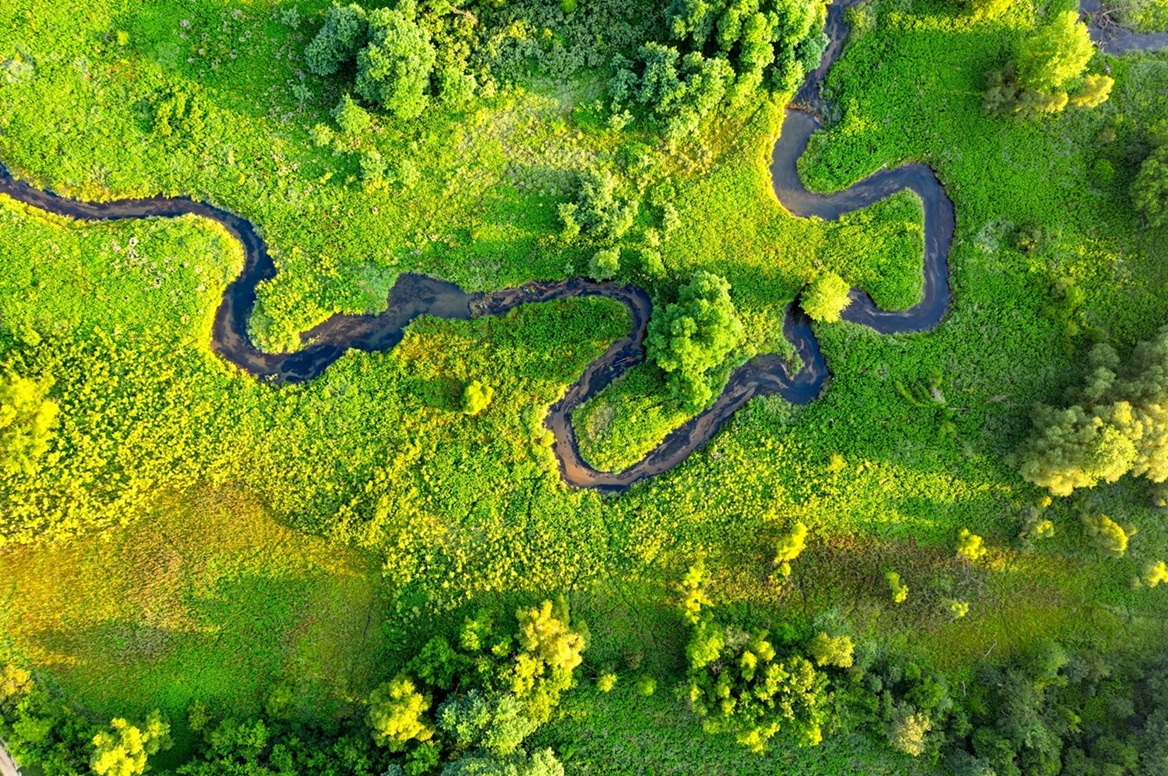
Rather than treating the “100 Proofs” concept generically, the initial page listed 16 featured case studies, including the South African quota argument, Oklahoma quail, Eastern Whio, Zimbabwe elephants, Pakistan markhor, anti-poaching examples, the Heart Morass, and several human-wildlife-conflict cases.
They present these stories as “proof” that hunting is conservation, but none establishes that the killing of a wild animal was itself the conservation intervention. At most, they demonstrate that money associated with hunting can sometimes be channelled into conservation.
Several case studies may demonstrate that hunting-related money, participation or advocacy can support a conservation project. That is not necessarily evidence that killing wildlife is itself the conservation intervention.
Wildlife Alive or Wildlife Utilised? A Perusal of Case Studies
The “Duiker Saved” entry is probably the easiest example to challenge. The case study says that an anti-poaching team rescued a duiker from a snare line, transported it away and released it unharmed – and that this was paid for by hunter dollars.
The problem is that this proves that anti-poaching works, not that hunting is conservation. Why does this require hunting? The conservation achievement is the removal of the snare and rescue of the animal. The hunting connection is simply a funding mechanism. If hunters fund an anti-poaching operation that saves an animal, the conservation benefit comes from stopping poaching – not from killing other animals.
They would need to demonstrate that hunting revenue is uniquely necessary for that operation, rather than simply being one possible source of funding.
“Quail Research in Oklahoma” is a particularly interesting case because it relies heavily on the Pittman-Robertson system, under which taxes on firearms and ammunition contribute to wildlife conservation in the United States. The page points to quail research funded through Oklahoma’s wildlife agency as “proof” of hunting conservation.
There is a genuine conservation success here – but there is also an important distinction: the money comes from a tax mechanism, not directly from the act of killing quail. And the system is much broader than hunting itself. Pittman-Robertson funds support wildlife management, habitat restoration and research, including work benefiting species that are not hunted.
So this example actually supports the more nuanced proposition that people who participate in hunting contribute financially to wildlife conservation.
This is not equivalent to saying that killing wildlife is a conservation activity. If the conservation contribution is the money, then we should ask whether society could capture that funding through other mechanisms without requiring animals to be killed.
There is also “Zimbabwe Elephant Poaching at a Low: Hunters are Conservationists” – a title which itself reveals problems as a reduction in poaching does not demonstrate that hunting caused the reduction. There are numerous possible explanations for changes in poaching levels: enforcement, ranger deployment, better crime intelligence, shifts in economic conditions, political circumstances, community programmes, demand for ivory, border controls and changes in poaching pressure.
To establish that hunting was responsible, the case would need something considerably more convincing than temporal association. You would want to see: comparable areas without hunting, before-and-after poaching data, funding amounts, exactly how hunting revenue was spent, ranger numbers and deployment, poaching rates over time and alternative explanations for the decline. Without those controls, the argument risks becoming post hoc reasoning.
The “Economic Impact of Trophy Hunting in Africa” is another category where we should distinguish economic impact from conservation impact. Jobs and economic activity are real benefits, but saying that an industry creates employment does not establish that the industry is ecologically beneficial.
A logging operation can create jobs. A mining operation can create jobs. An intensive agricultural operation can create jobs. Clearing Amazon rainforest to plant soybeans creates jobs. The question is: does the conservation benefit generated by hunting outweigh its ecological costs, and would the same land and biodiversity be better protected through another economic model? Hunting can generate economic activity – but those benefits can be uneven.
We need to scrutinise the word “proof” particularly carefully when it comes to “How Trophy Hunting Helps Protect Biodiversity: Scientific Proof from South Africa.” Science almost never establishes something as straightforwardly as “hunting equals biodiversity protection.” The proper question is whether a particular hunting regime produces a measurable net conservation benefit under particular circumstances.
The Origins Foundation repeatedly uses terms such as “science-based”, “sustainable”, “regulated” and “responsible”. Those are not outcomes; they are conditions that are being asserted. The crucial question is: who determines that the hunting is sustainable, using what data, and how is that conclusion independently verified?
The “Ecosystem Decay Intensifies Biodiversity Loss” case is potentially a classic false-equivalence problem. Showing that ecosystems can deteriorate when herbivore populations become excessive does not automatically establish that hunting is the appropriate solution.
There are numerous forms of wildlife management, such as translocation, fertility control, habitat manipulation, predator restoration, natural population regulation, changes in land management, fencing modifications, rewilding and – where scientifically justified – lethal population control. The question is whether recreational hunting is necessary to solve the problem.
The lion and “man-eating lion” cases are emotionally powerful examples, but they are also among the weakest for demonstrating that recreational hunting is conservation. A lion that is actively threatening human life is a human-wildlife conflict and public-safety issue. If an individual lion has killed people and cannot safely be relocated, lethal removal may be justified – but that tells us almost nothing about trophy hunting.
There is a big difference between saying an individual animal poses an immediate threat to human life and needs to be removed – and saying people should pay to hunt lions as a conservation strategy. The first is wildlife conflict management. The second is recreational utilisation. They should not be rhetorically merged.
Additional analyses of these case studies are available here.
The Origins Foundation calls these entries “Proof” and says the purpose is to show what hunting is doing for people and wildlife, but in each case the actual conservation intervention is something else: anti-poaching, habitat restoration, predator control, community development or wildlife management. That distinction is not semantic. It is fundamental.
Does Conservation Need a Trigger?
What would have happened without hunting? That is the question the campaign needs to answer. If hunters stopped hunting tomorrow but donated the same amount of money to anti-poaching, would the duiker still be saved?
If the same amount of money were invested in the Eastern Whio project by non-hunters, would the whio still recover? If photographic tourism, philanthropy or a conservation levy generated the same community revenue, would the markhor still be protected?
If a landowner could earn comparable income from wildlife viewing, would the animals still remain on the land? Without answering those counterfactuals, we cannot establish that killing animals is the causal mechanism producing the conservation benefit.
A 2018 South African economic study estimated that trophy hunting generated more than USD $341 million in total economic impact and supported more than 17,000 employment opportunities – but, crucially, the authors explicitly stated that their study did not investigate hunting’s contribution to conservation.
One cannot dispute that hunting is an economic activity, however one can question the much larger claim that economic activity generated by hunting should, in the same breath, be regarded as conservation. What proportion of the conservation funding comes from hunting, and what proportion of hunting revenue actually reaches conservation? And could the same operations be funded through other mechanisms?
Says Gill Simpson, founder and director of the Wild Rescue nature reserve, “The argument against hunting is ultimately an argument about values: wildlife is not simply a resource to be bred, traded and killed for profit, recreation or trophies. Conservation must mean more than keeping enough animals alive to sustain their commercial use.
It must recognise their ecological value, sentience and right to exist within the wider web of life. Conservation is not simply about ensuring that there are enough wild animals left to kill. It is about protecting the ecological communities and living beings with whom we share the planet. We do not create biodiversity; we inherit it. Our responsibility is not to prove how much of it we can exploit, but to ask how much of it we can protect.”
South Africa does not need vitriol between hunters and conservationists: we need better evidence, stronger transparency and a willingness to acknowledge both complexity and the importance of articulating clear, structured relationships between conservation outcomes and hunting.
Where hunting genuinely protects habitat, supports communities and contributes to scientifically-sound wildlife management; those benefits should be recognised. Where commercial incentives, selective breeding, trophy collection or inadequate regulation undermine biodiversity conservation; those problems must also be confronted.
As recently said by Dr. Bool Smuts, “The danger is not sustainable use. It is sustainable use as a slogan used to authorise decisions whose sustainability has never been independently demonstrated. What we need is not another slogan about the “wildlife economy”. We need institutional integrity, transparent science, independent oversight and meaningful public participation.”
The goal should be to ask whether a particular practice genuinely delivers measurable, long-term conservation benefits – and whether those outcomes could be achieved with less harm. That deserves something better than public-relations puffery seasoned with conjecture, loose correlation and the remnants of colonial rationales on ecological paternalism: it deserves strong evidence.