By Wikus Engelbrecht
Spekboom (Portulacaria afra) is Afrikaans for ‘bacon tree’ or ‘porkbush’ – a hardy, indigenous South African shrub named for its plump, edible fleshy leaves with their tangy, lemon-like flavour.

For its purported efficacy in emissions capture, some carbon credit investors presently regard it as the messiah in succulent form – but will the Spekboom scheme go belly up?
While the species can help restore degraded land in its native Eastern Cape, some experts say it is not the exceptional climate solution it is often portrayed as – even as a USD 120-million World Bank bond and a long-term purchase agreement with Amazon this year now make carbon credits from the plant a significant financial product.
For more than a decade, South Africans have been told that planting spekboom is a panacea for helping cool the planet. This year the idea reached major global capital markets.
The World Bank priced a spekboom restoration bond in April, a Singapore-based developer, Imperative Global Solutions, is planting the succulent across tens of thousands of hectares of the Eastern Cape as their flagship project, and Amazon has agreed to buy a share of the resulting credits.
Researchers who study the plant say the popular story overstates what it can do – and that the considerable investment now flowing towards it raises the stakes for either getting the science right, or throwing good money after bad on the greenwashing bandwagon.
What spekboom does well
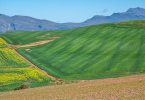
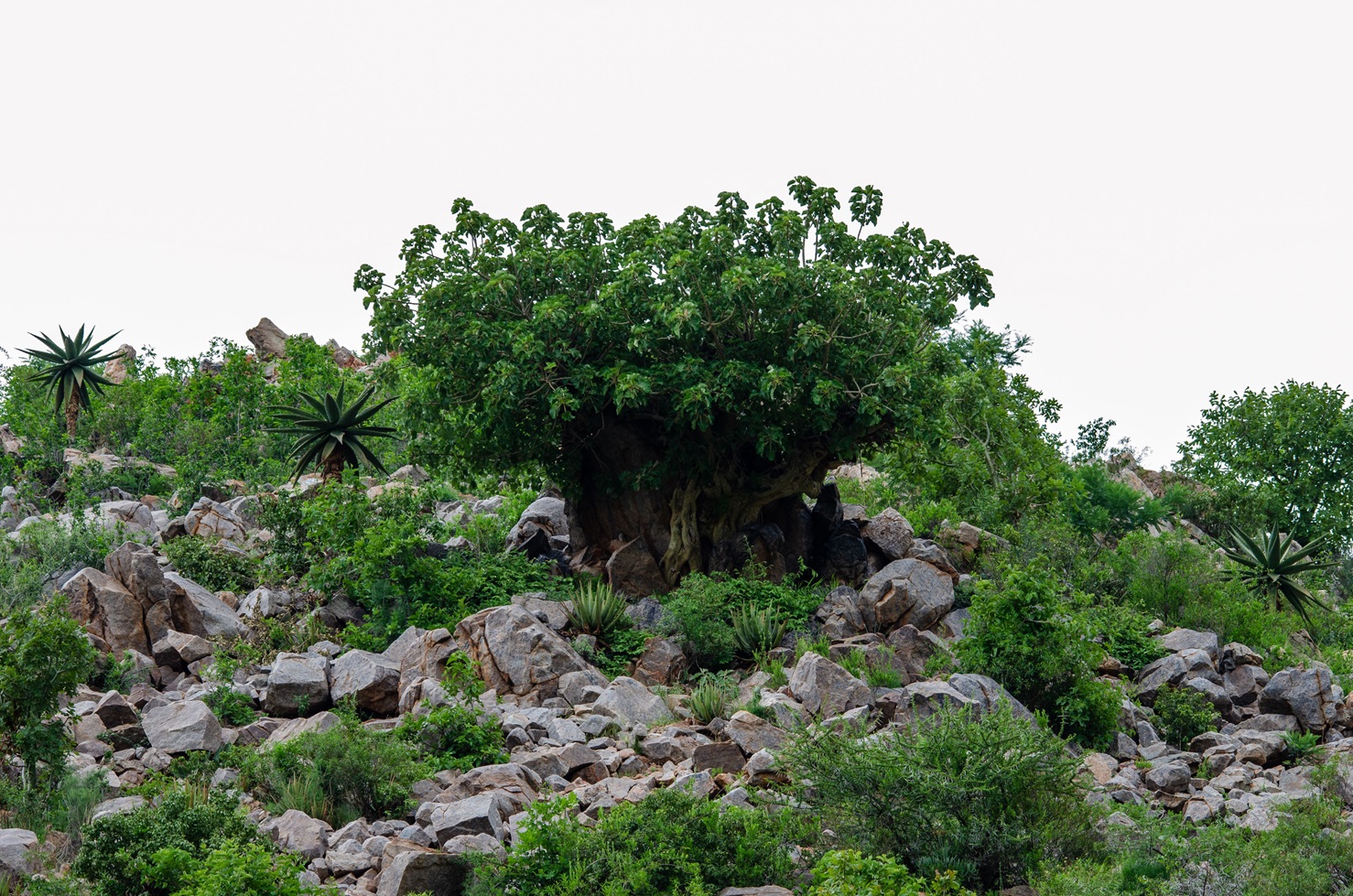
Spekboom is a drought-hardy succulent that anchors Albany thicket, a dense vegetation type in the south-east of the country.
A 2021 study in PLOS ONE by researchers at Nelson Mandela and Stellenbosch universities cites earlier research putting the carbon stored in intact Spekboom thicket at about 200 tonnes per hectare, a relatively high figure for a dry ecosystem.
Much of that thicket has been damaged by livestock, particularly goats. The same study estimates that about 45 percent of spekboom thicket had been altered by 2000, with losses of more than 80 tonnes of carbon per hectare, and notes that degraded thicket does not regenerate spontaneously.

Planting spekboom cuttings can restart the process: the canopy shelters the soil, fallen leaves rebuild it, water soaks in again and – over 30 to 50 years – other thicket species return.
At a private game reserve in the Eastern Cape, decades of stock farming had left former ostrich camps there with hard, bare ground, and a quarter-century of rest brought almost no recovery.
About 15 years after Spekboom cuttings were planted in one camp, they have grown into shoulder-high shrubs, the soil beneath them is dark and rich in leaf litter, and seedlings of jacket plum and other woody thicket species are emerging in their shade.
That is evidence of restoration in one specific ecosystem. It is not, however, evidence that Spekboom is a remarkable carbon sink.
Where the claim breaks down
Let’s not beat about the bush. Spekboom does not draw down more atmospheric carbon than other trees in the thicket community.
The practice of mass-planting did not originate in carbon claims; the carbon-sink story was attached later.
Scale also limits what thicket can contribute. Thicket covers 2.4 percent of South Africa and holds about 4 percent of its land-based organic carbon, compared with roughly 36 percent percent in grasslands and 31 percent in savanna, according to the South
African National Biodiversity Institute’s 2020 carbon sinks assessment. Soils overall hold around 89 percent of organic carbon. Propagating Spekboom, however extensively it is done, cannot materially change the national carbon balance.
Geography matters. Spekboom thicket occurs naturally between the Fish River in the east and the Gouritz River in the west. Outside that range, planting Spekboom does not restore a degraded ecosystem.
Says Dr. Christina Mars of the Hessequa Herbarium, “Spekboom usually grows in large stands further towards the Eastern Cape. This whole Spekboom carbon sink story has done a lot of damage.
“Suddenly, Spekboom was being planted everywhere, even at Pauline Bohnen Nature Reserve, where it doesn’t belong at all. Spekboom is certainly not the best carbon sink. It’s great where it naturally occurs in large numbers, and that’s all. Microalgae (diatoms), for example, are much more efficient carbon sinks.”
“The secret to restoration is diversity, not monoculture. And Spekboom isn’t a pioneer plant that disappears or makes way for other plants after a few years. This is more about carbon credits, which are a terrible capitalist offshoot of nature conservation.”
“They do nothing for nature but enable large companies to greenwash themselves and their projects. Just consider the ludicrous image of data centres surrounded by Spekboom plantings. An offset does not reduce anyone’s emissions; the buyer carries on emitting.”

“Since those Spekboom stories first broke, some 15 years ago, I believe they have caused more damage than they have produced positive outcomes. In this case, in proper Eastern Cape Albany Thicket habitat, it could certainly work, but it must be applied hyper-locally.”
“In the right environment, many species thrive beneath Spekboom plants. It also flowers beautifully there. Taken out of its natural context, it rarely flowers, if ever.”
“It’s not the miracle plant when it comes to carbon. It’s no better than other plants, and fashionable Spekboom monoculture suburban hedges don’t attract the insects that support the needs of endemic plants.”
“Carbon credits are awarded for, for example, pine plantations that have now grown out of control at forestry operations such as Garcia, spreading over the mountains into conservancies like Grootvadersbosch and Sleeping Beauty/Kristalkloof.”
“Yet, ironically, the farmer who protects their mountain fynbos and removes invasive species receives no carbon credits for preserving pristine fynbos. This is a tragic mistake,” she concluded.
The Spekboom story is not unique. A 2021 investigation into the global tree-planting boom found that many campaigns put trees where they never grew, in grasslands, savannas and shrublands, and often favoured fast-growing exotic species over native ones.
Restoration projects driven by ambitious targets can overlook ecosystem classification, and planting the wrong species in the wrong place can damage indigenous biodiversity and the very carbon storage that the planting was meant to promote.
Grassland ecologist William Bond of the University of Cape Town summed up the principle as “the right tree in the right place for the right reasons”. Spekboom, on that test, is not appropriate to every landscape: it belongs in the Eastern Cape’s Albany thicket biome.
Concerns about carbon credit integrity are not new, and critics say they are not confined to a few bad projects. A 2025 review by researchers at the University of Oxford and the University of Pennsylvania, which the Smith School describes as the most comprehensive assessment of the evidence to date, examined 25 years of offsetting and concluded that most offsets should be phased out.
It cites recurring problems with permanence, leakage, double counting and systems that can be gamed – and its authors say the failures are systemic.
A 2023 study in the journal Science of 26 avoided-deforestation projects in six countries found that most had not significantly reduced deforestation, and that those that had delivered less than claimed.
A review of more than 2,000 projects, summarised by the Australia Institute, estimated that 88 percent of credit volume across four sectors did not represent real emissions reductions. Individual cases are starker. In The Great Cash-For-Carbon Hustle, The New Yorker reported that only 15 million of 42 million credits from a Zimbabwean forest project reflected genuine avoided emissions.
Power Shift Africa, citing investigations by REDD-Monitor, says the Isangi REDD project in the Democratic Republic of Congo saw deforestation accelerate after it began, and was cancelled and delisted in 2024.
It also reported that TotalEnergies’ Batéké project in the Republic of Congo had planted just 12.5 percent of its promised 40 million trees when it was found abandoned. These cases all raise the same questions: would the benefits have happened anyway, is it measured and reported honestly, are the gains quantified accurately – and are they lasting?
From the field to food fad
We have been here before, in the supermarket aisle. Take a genuinely good food, strip away its context and sell it as a cure for everything. Goji berries and açaí were going to revitalise our health.
Coconut oil was hailed as a wonder fat until the American Heart Association advised against using it, due to its very high levels of saturated fat. Kale had its season as a saviour, and turmeric lattes followed.
Quinoa became a Western staple, and researchers have argued ever since about what the boom did to the Andean farmers who grew it. Since travel down the Silk Road moves like molasses; matcha tea – despite having been in use in China since the 7th century – is suddenly trending as a novel wellness drink in South Africa, spawning matcha bars in major cities – but with side effects and contraindications that aren’t loudly promoted.
The avocado turned into a symbol of wholesome living, while its thirst for water and its link to forest clearing in parts of Mexico went largely unmentioned. It’s not a party if the guacamole comes from environmental devastation.
Spekboom is the same story, played out in our gardens and parks, and on our consciences. In each case there is something real at the heart of it: a nutritious berry, a fibrous leaf, a metabolism booster, a healthy fat, or a plant that can heal one stretch of ruined land.
The fad inflates that kernel into a miracle and makes someone a good deal of money from it. Meanwhile the slower, less glamorous truth goes unsold: a varied plate, a diverse thicket, and the patient work that neither one can do without.
Spekboom has also been on the plate. Its leaves are edible, tart and lemony, and rich in vitamin C. Foragers and chefs have been putting them in salads, preserves and garnishes for years, and at least one top South African restaurant has built dishes around them – billing Spekboom as “the lost ingredient” and, in the same breath, praises its carbon-absorbing powers.
The two stories travel together. A 2015 foraging feature on a retailer’s blog went further, saying one plant “compensates for a family of four’s carbon sequestration over their entire lives”. The myth grows in the telling.
None of this makes eating spekboom wrong. It was veldkos long before it was a trend, and University of the Free State researchers argue it deserves a place as a staple food. The question is the one we keep meeting: whether the plant is valued for what it objectively is, or for the marketing halo it has been given.
If demand for the leaves grows, so does the question of where they are picked. Gardens and farms are one thing; restored land is another.
Restoration is difficult, and the numbers are estimates
Planting is not a guarantee of success. Researchers planted 300 experimental plots across the biome. In the 40 plots that met best-case conditions, the correct habitat and light browsing by animals, large cuttings survived at about 45 percent after roughly three years and small ones at about 25 percent.
Some plots recorded no survivors at all. An earlier analysis of the same experiment found that heavier browsing, and planting in the wrong habitat were the two strongest predictors of failure.
The carbon figures are also estimates. Studies of established stands, many planted informally by landowners rather than under controlled project conditions, reported sequestration of 1.4 to 4.5 tonnes of carbon per hectare per year.
Converted to carbon dioxide equivalent – the unit in which credits are sold – that is roughly 5 to 16.5 tonnes. Imperative, the developer behind the largest project, assumes 10.4 tonnes; smaller projects assume 4.6 to 8.5.
The assumptions are plausible, but they rest on a limited and ageing body of evidence, and they hold only if the cuttings survive.
One concern is that optimistic figures are being applied across a highly variable landscape, and that overstating the yield could cost investor confidence if the land does not deliver.
The Carbon Market brings home the bacon
In April the World Bank priced a USD 120 million bond of private capital into a 50,000-hectare project, which promises 11,000 jobs.
Amazon has agreed to buy carbon removal credits at a fixed price for more than a decade: USD 1.95 million of the USD 20.8 million expected from the first 50,000 hectares, or about 9.4 percent.
Part of the bondholders’ return is linked to credit revenue. Imperative’s wider goal is 100,000 hectares within four or five years.
The project’s backers have an arguable case. It is registered under Verra’s Verified Carbon Standard and has been rated favourably by the agency BeZero Carbon. Bondholders accepted a lower fixed coupon, and part of their return is tied to planting success – so the structure penalises failure.
Much of the detail, however, is not public. Neither Imperative nor Amazon discloses the price of the credits. The revenue share with landowners is confidential, and many partners are bound by non-disclosure agreements.
The companies’ figures are hard to verify independently. Access is uneven: trading credits requires registration with a certifier and independent audits that can cost as much as USD 100,000 each – which is manageable for an industrial operator, but daunting for a landowner with a few thousand hectares.
Confidence in the wider market has also been tested. A Verra-verified forest-protection project at Lake Kariba, in Zimbabwe, overstated its carbon benefits by more than 15 million tonnes.
That is a different type of credit from spekboom’s removal credits, and carries a different risk, but it demonstrates the consequences when measurement fails.
Spekboom has a stronger case than many projects, because degraded thicket does not recover unaided, which makes the benefit plausible. The open questions are whether the carbon is counted accurately and whether it remains stored for decades.
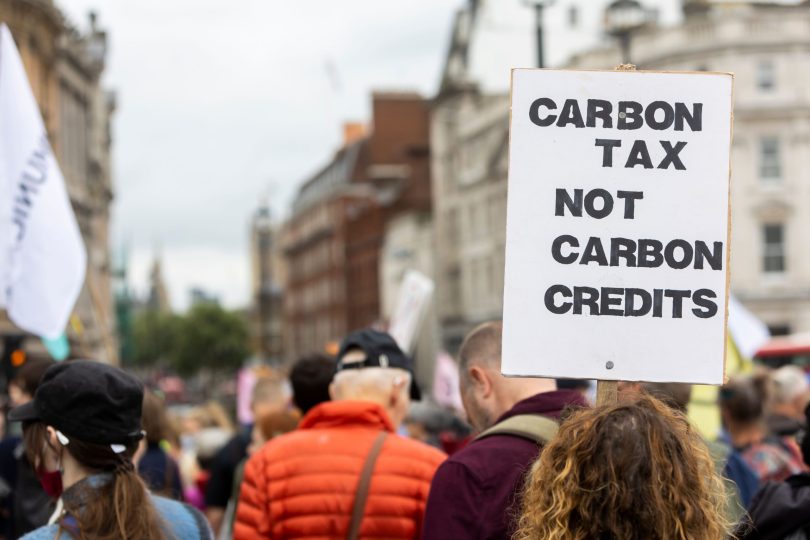
There is also a structural objection. An offset does not reduce the buyer’s own emissions; the buyer continues to emit. Carbon credits allow large companies to greenwash their operations.
Defenders of the model counter that restoring a landscape of this size is expensive, and some researchers involved say they see few funding alternatives to carbon credits.
“Dumb money” is a stock-market term for capital that flows in without the specialist knowledge to judge what is being bought.
The risk is sharp with credits in carbon markets, because a tonne of carbon removed cannot be inspected: its value rests on baselines, growth models and verification methods that few buyers can audit.
Spekboom illustrates the problem. The survival of cuttings varies widely, the carbon estimates come from a limited evidence base, and the price and landowner revenue share are undisclosed, so outsiders have little to check the figures against.
To be fair, the projects’ backers point to Verra registration and BeZero’s rating, and many buyers employ expert advisers: but the term describes how easily the appeal of ‘ecosystems restoration publicity’ and the wish to be seen acting on climate change can outpace hard questions about what the money is actually buying.
It depends on the context of your area or environment: “In its natural range, Spekboom is fine. But in our region, you would achieve far greater long-term benefits by removing invasive alien plants than by introducing an extralimital species like Spekboom.
I think there is far more value in rehabilitating veld to its natural state, with its natural biodiversity, and in putting our efforts into removing invasive alien plants.
The damage invasive plants do is stark and considerable. If I had to choose between investing money in clearing invasive plants or in propagating Spekboom, I would much rather focus on controlling the invasives,” remarked Dr. Wilhelm de Beer of the Gouritz Cluster Biosphere Reserve in Riversdale, Western Cape.
What the Spekboom evidence supports
Where Spekboom grows naturally, on land stripped by livestock, it is among the most effective tools for repair, and carbon finance may be the only realistic way to pay for restoration at scale.
What makes the work succeed, researchers say, is the return of many thicket species – not of Spekboom alone – and planners on partly degraded land are planting at lower density so the canopy does not crowd out other plants. A monoculture is not the goal.
The honest framing is modest: spekboom is a hyper-local restoration tool, and carbon credits are a financing mechanism with real uncertainties, opaque contracts and a patchy record. That is a case for better transparency and independent scrutiny.
For the rest of us, the lesson is simpler. A Spekboom hedge is not an offset, and no single species is a climate fix. Plant what belongs where you live, and be wary of any miracle claims that arrive with a price tag.
Says Gill Simpson, founder and director of the Wild Rescue nature reserve, “The climate crisis is too urgent to be distracted by a fashion show of specious solutions.”
“As the predicament intensifies and the world approaches critical tipping points, we can ill afford to waste time, money and public trust on remedies that promise more than they deliver.”
“Spekboom has a legitimate role in restoring degraded Albany thicket, but its potential has been inflated into a climate-saving marvel it was never meant to be. This is no time for whimsical investments driven by hype rather than evidence. We need real, science-based solutions that deliver measurable results, rooted in ecological realities and the principle of restoring the right indigenous biodiversity in the right place.”
Spekboom belongs more on the dinner table than it does on the climate agenda.
The elephants of the Eastern Cape have known it for centuries as fodder. The plant’s Afrikaans name, “olifantskos”, means “elephant’s food”, and in places like Addo Elephant National Park it is a dietary staple.

Elephants browse it from the top down, which spreads the shrub outwards, and the branches they snap off often take root where they fall.
It is restoration with no bond, no auditor and no non-disclosure agreement, just a very large diner who leaves the tip in the soil. There are even signs that some Albany thicket farmland once grazed for mohair is going back to Spekboom, a comeback that needs no credits.
Global delegates will gather in Antalya, Türkiye, for COP31 from 9 to 20 November, where governments will negotiate on goals such as limiting warming to 1.5 degrees Celsius and helping vulnerable communities adapt while focusing on accelerating climate action.
Who would seriously present these world leaders with a juicy shrub and declare their climate problems solved? Spekboom can repair an area of the Eastern Cape, and it makes a fine dietary addition – but it cannot resolve an intricate global dilemma.
Let it feed the elephants; and let the climate be tackled at the source of emissions, at the policy level and through proven, pragmatic methods of carbon capture.