
A new environmental art project that transforms plastic waste collected from the veld and the Huisriver in Barrydale into works of art has gained new momentum this year with the Magpie Art Collective’s VisHerman project.

The project, based on an original Redfin Minnow prototype designed by the late well-known artist and blacksmith Herman van Wyk, uses waste material to draw attention to plastic pollution and the conservation of the endangered Tradouw redfin in the Huis River.
“VisHerman actually started with a very simple idea: to give something we normally regard as rubbish a new value,” says Tielman de Villiers of the Magpie Art Collective.
“When that material takes the form of a fish, the conversation changes. It is no longer just about waste, but about what we are doing to our rivers and marine life.”
VisHerman was launched earlier this year at Lumenocity in the Company’s Garden in Cape Town, where Magpie worked with the Grootvadersbosch Conservancy on a large structure made from Spanish reed, an invasive plant found in the Huis River area.
What started as a local art and awareness project has since expanded into larger installations, including one for a SANParks shop in the Tsitsikamma National Park.
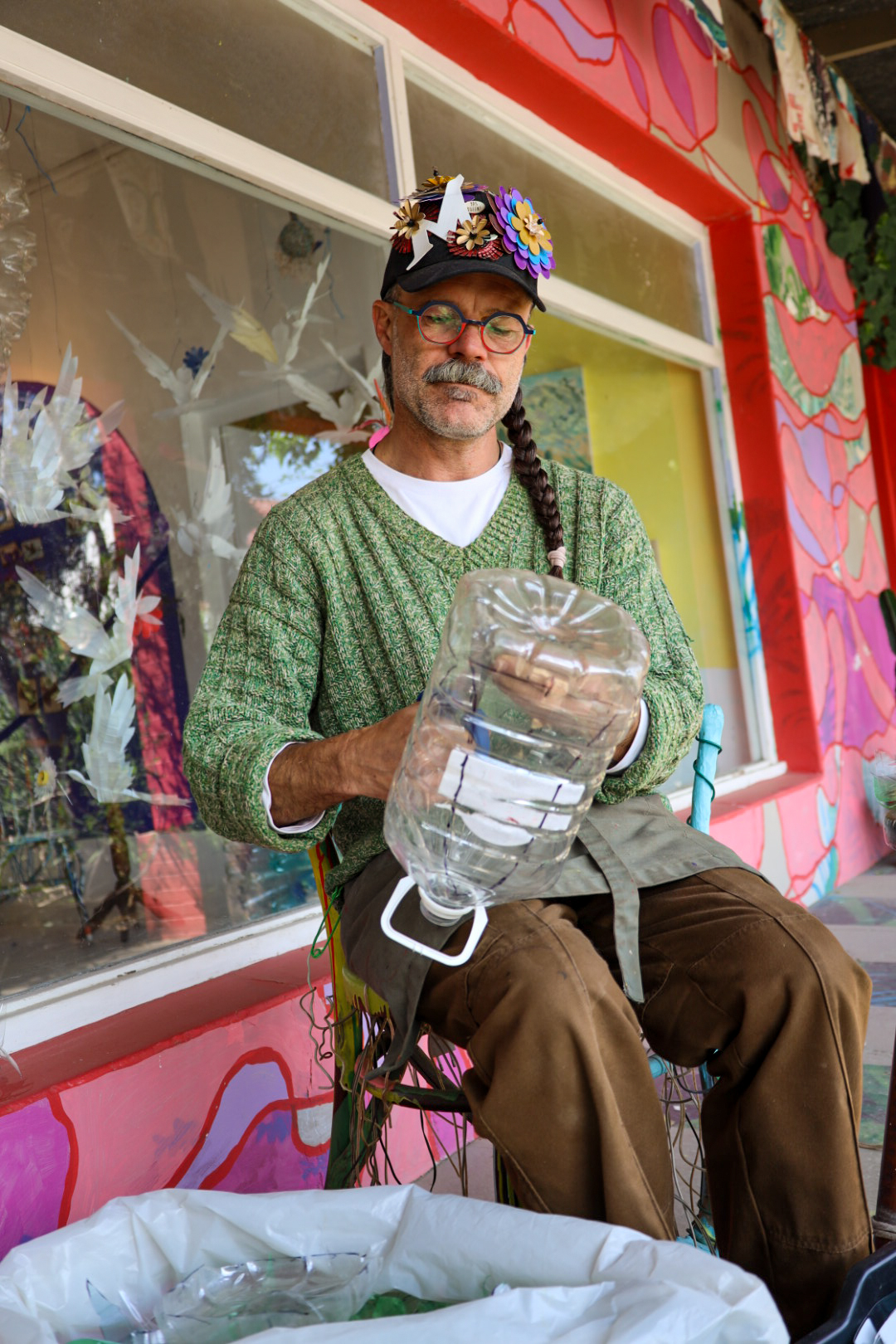
An old idea gets new life
At the heart of the project is a Redfin Minnow prototype originally created by Van Wyk.
Van Wyk’s original idea has taken on new meaning as Magpie uses it as the starting point for a project in which waste materials are transformed into fish.
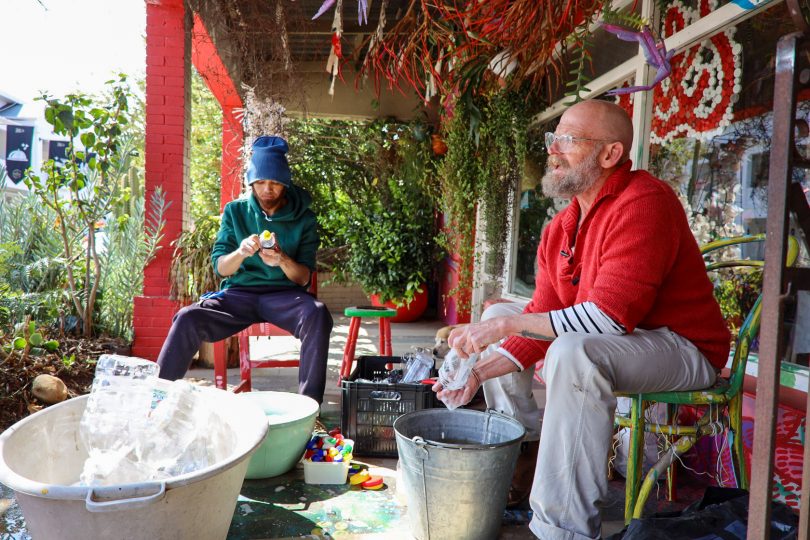
The material does not come from a factory. It is collected from the veld and the Huisriver, with plastic bottles and other waste that would otherwise ultimately become part of a much larger pollution problem.
“The plastic we use doesn’t come from a factory or a shop. We take it from the places where it shouldn’t be, from the veld and the river,” says De Villiers. “By turning it into a work of art, people can literally see how much material there is and what the impact could be if we simply leave it lying around.”
The symbolism is simple: something regarded as rubbish is transformed into something recognisable and meaningful.
But behind the art lies a serious environmental message.
Plastic does not simply disappear when it enters the environment. Over time, larger plastic objects can break down into smaller particles, including microplastics. Research also shows that microplastics are found not only in soil, freshwater and the sea, but can be transported through the atmosphere and deposited in rainwater.
The problem therefore moves through the same natural systems on which people, animals and plants depend.
By removing plastic from the environment at an early stage, before it breaks down further and spreads through water and other natural systems, VisHerman is trying to be part of the solution in a tangible way.
A fish unique to Barrydale
One of the most important elements of the project is the Tradouw redfin, a small freshwater fish found only in the Huis-Tradouw water system around Barrydale.
The species, Pseudobarbus burchelli, is classified as critically endangered and is regarded as one of South Africa’s most geographically restricted freshwater fish.
The Huisriver is particularly important to the survival of the species. Conservation work in the area includes removing invasive plants, improving river quality and protecting the remaining habitat.
For Barrydale, the river is more than simply a watercourse. It forms part of the landscape, agriculture, biodiversity and community surrounding the town.
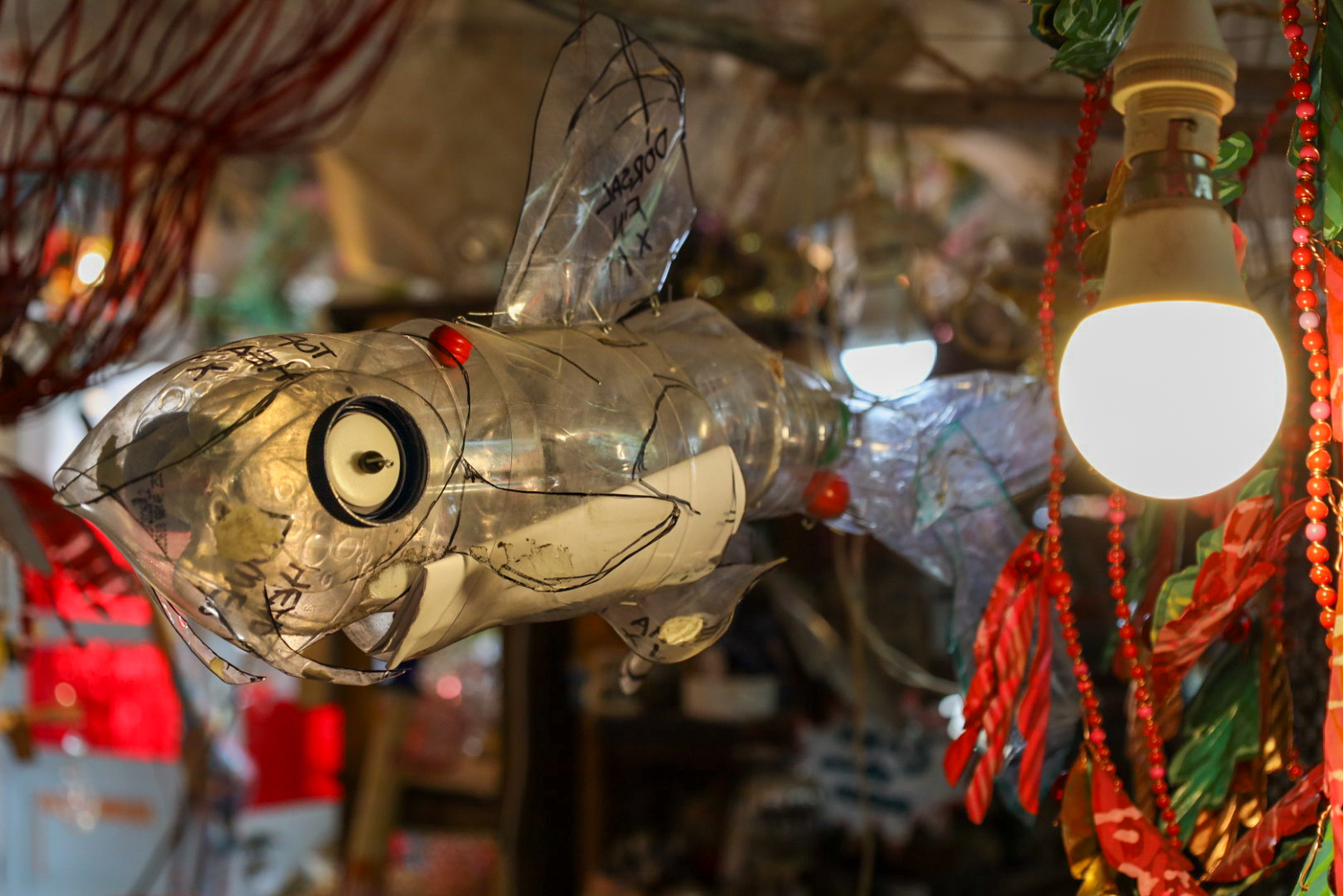
It is this local connection that makes the VisHerman project more than just an art project.
“The Redfin is a small fish, but its story is big,” says De Villiers. “It exists only here in the Huis-Tradouw water system. For us, it makes sense to build a work of art around this species because it connects the waste we collect with the place where we live and the species that depend on that place.”
From Spanish reed to a forest of fish
During Lumenocity in Cape Town, Magpie worked with the Grootvadersbosch Conservancy to create a tree structure from Spanish reed.
Spanish reed is an invasive species in the Huisriver area, but when properly managed and removed, the material can still be put to useful purposes, including structures such as fences and ceilings.
Under the illuminated tree, a small school of Redfins appeared to swim.
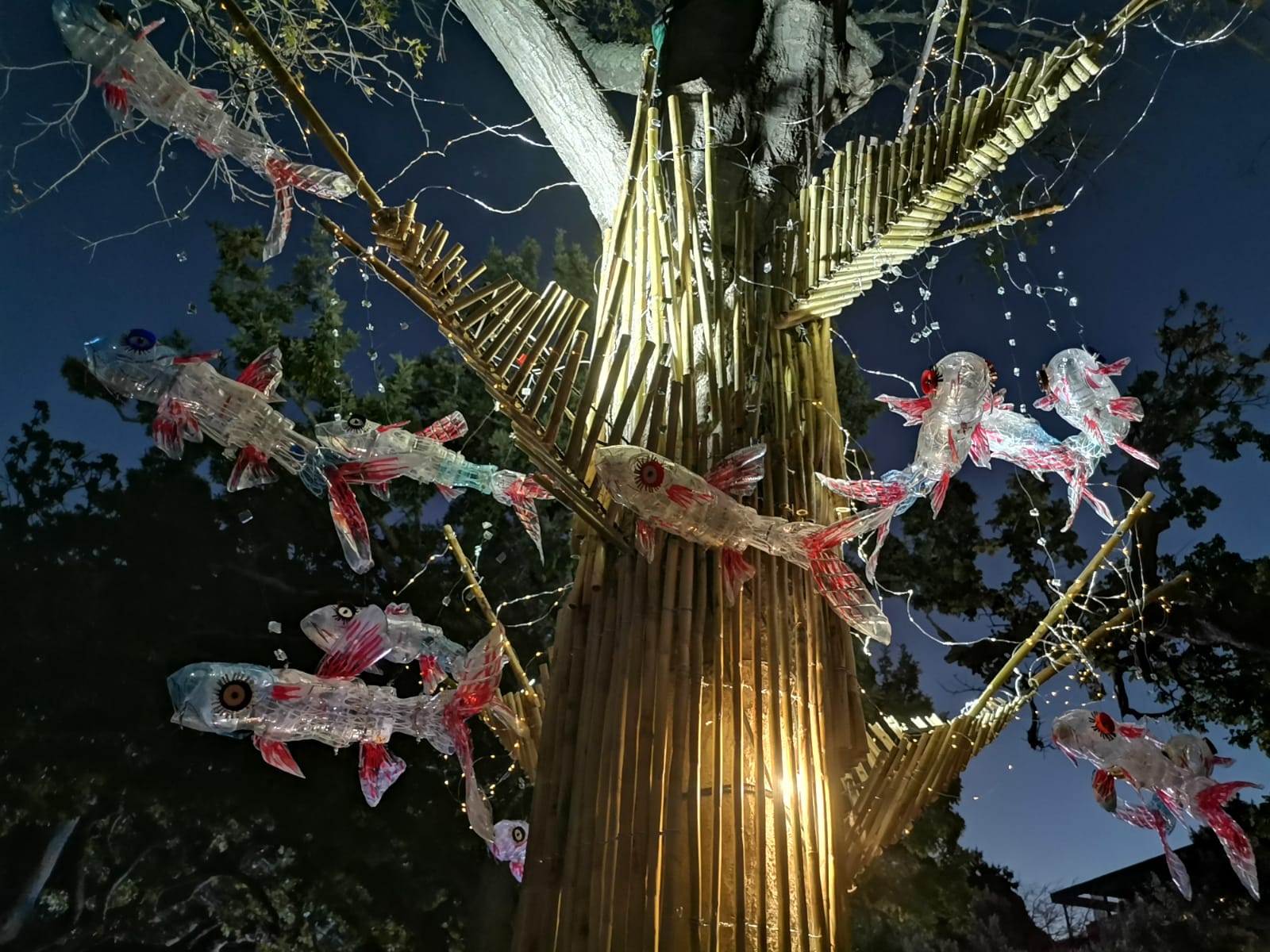
The image connected the work of the Grootvadersbosch Conservancy in the surrounding natural areas with the conservation of the river and its endangered fish.
The Conservancy describes healthy forests and mountain catchments as the foundation of healthy water systems, wildlife and communities.
The mountains above Barrydale form part of the Cape Floristic Kingdom and contain indigenous forests and fynbos that store water, protect soil and supply water to rivers such as the Huis River.
The removal of invasive plants is therefore not simply an aesthetic exercise. It forms part of the broader effort to restore natural water systems and habitats.
“We are not simply trying to remove something from the landscape and throw it away,” explains De Villiers.
“Where an invasive plant needs to be removed, we also ask: What can we do with that material? In this case, the reed could become part of the structure. It gives us an opportunity to talk about invasive species, water and conservation without the message becoming preachy.”
From Barrydale to the sea
The VisHerman concept has since developed further.
The next phase brought two species found along the Cape coast into the form of art fish: shad, also known as elf, and yellowtail.
These fish were produced for a retail space at the Tsitsikamma National Park for SANParks.
The installation, however, goes much further than just two fish.
More than 400 fish form a so-called bait ball, with smaller groups of sardines moving among them. The fish will hang in a swirling movement around the skeleton of a whale, all suspended from the ceiling of the space.
The whale skeleton was designed and manufactured by a designer.
The fish themselves are made from plastic, a material now found virtually everywhere in the world’s water systems.
The contrast is deliberate: plastic, which has become a threat to marine life, is being used to create the very forms of marine life itself.
“What is interesting to us is that the project is now moving from Barrydale to the coast,” says De Villiers. “The species change, but the message remains the same. We use a material that has become a major threat to water systems to depict the life that occurs in those very water systems.”
When the more than 400 fish are eventually displayed together as a bait ball, the message is expanded further.
“When you see hundreds of fish moving together, you start thinking about an entire ecosystem. And then you realise again that plastic is not simply a piece of rubbish on the ground. It can eventually become part of the water systems and food chains on which these animals depend.”
A local Herman takes the work forward
The project also has a human dimension.
VisHerman has welcomed its first apprentice, Herman Braaf, a local resident.
For Magpie, the project is not only about making fish, but also about transferring skills and creating the possibility of eventually growing the project far beyond Barrydale.
“We want this to be more than a series of beautiful installations,” says De Villiers. “If we can transfer skills, someone else can do it too. This creates the possibility that VisHerman will eventually not just be a Magpie project, but a process that communities themselves can use.”
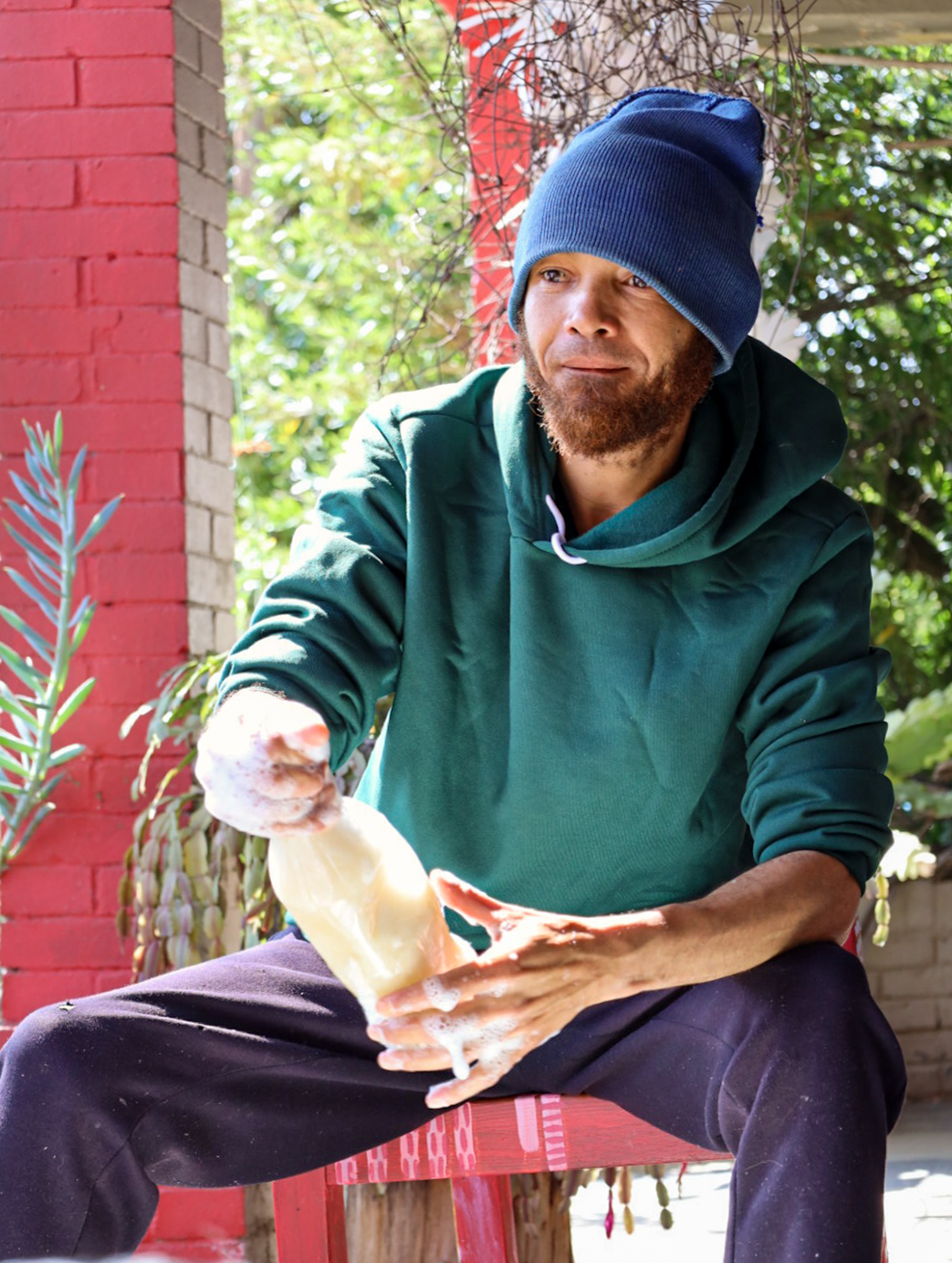
The long-term vision is to make the process available to communities and groups around the world.
The aim is eventually to make a free online demonstration video and pattern available so that people can make their own VisHerman fish.
These could then be used for environmental projects, awareness campaigns or even fundraising projects.
In this way, VisHerman does not have to remain a single work of art or installation. The idea can move from community to community.
“Our dream is to make a free pattern and demonstration video available so that people anywhere can make their own VisHerman fish,” says De Villiers. “It could be used by schools, community projects, environmental campaigns or fundraising projects. Then the idea starts taking on a life of its own.”
A legacy that keeps swimming
For Barrydale, there is particular significance in the fact that the project reaches back to the work of Herman van Wyk.
His Redfin prototype has been given new life in a project that brings together art, recycling, training and nature conservation.
“There is something special about the fact that Herman’s original idea is still alive today,” says De Villiers. “The prototype was the starting point, but it has now developed into something bigger where art, recycling, skills and conservation come together.”
From the plastic collected along the Huisriver, to the Spanish reed removed from the landscape, and from the small Redfin unique to these waters to a huge school of plastic fish reminding us of marine life along the coast, the same message runs through the entire project.
What we remove from the landscape does not have to be the end of the story.
Sometimes rubbish can become a fish, an invasive plant can become a tree, and an old artistic idea can become a new movement.
“That is, in a way, exactly what we are trying to do with VisHerman: give something people have thrown away a new life,” says De Villiers.
“And perhaps it is also a good metaphor for the bigger message. We cannot simply continue throwing things away and think they disappear. What we remove from the environment can sometimes be used again to remind us why that environment needs to be protected.”
That is the idea behind #VisHerman.