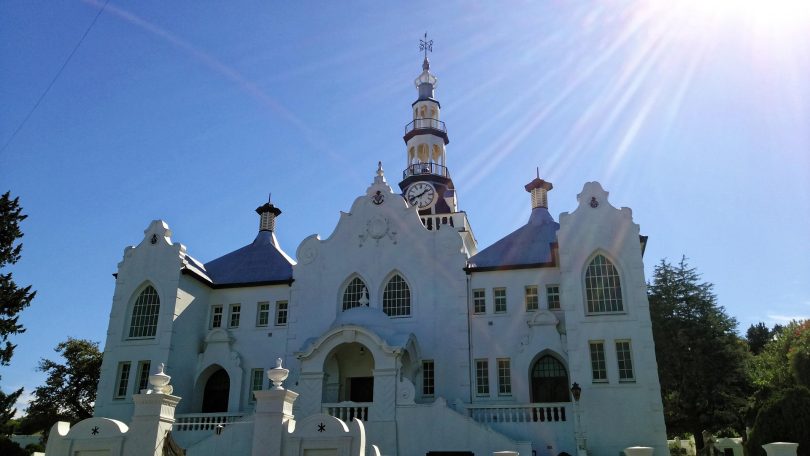

In his latest weekly column, Executive Mayor Francois du Rand argues that the true measure of local government is not the noise, criticism or crises of the day, but rather “what you build”.
It is a fair point.
The problem is that many residents, particularly in Barrydale, may struggle to recognise the picture he paints.
Nobody can deny that Swellendam Municipality remains in a better position than many municipalities across South Africa. The books may look healthy and the audits may read well, but local government is not judged only by spreadsheets and budget speeches. It is judged by what people see when they walk out their front doors every morning.
And that is where the mayor’s version of events begins to leave out important parts of the story.
For a municipality that prides itself on financial discipline and accountability, millions been been spent (lost) on independent forensic investigations into allegations of corruption and misconduct during this administration. These investigations did not happen by accident. They were commissioned because serious concerns existed.
Yet after the completion of these audits, residents are still asking a simple question: what has actually changed?
During 2025 two employees were suspended, but both are back at their posts today. As we’ve learned, the first was sent home for alleged involvement in tender fraud while the second allegedly took a bribe. Yet, strangely, even with the verified findings into far more serious claims of corruption at their disposal, Council has now argued that pursuing disciplinary action against those high ranking officials would result in ratepayers having to foot the bill of their salaries until such time they are either cleared or fired.
While that may be procedurally correct, it hardly explains why residents are expected to accept the status quo as a satisfactory outcome.
Even more concerning is the message it sends.
If forensic investigations identify serious concerns and provides recommendations, should those implicated continue occupying positions of authority while matters remain unresolved? Does that not expose the municipality to further risk? Does it inspire public confidence?
These are not political questions. They are governance questions.
Adding to public frustration are reports that some of those linked to ongoing controversy were claiming overtime as recently as this past weekend. Whether allowed by policy or not, it creates a perception problem for a municipality that constantly speaks about accountability and responsible financial management.
Barrydale provides perhaps the clearest example of the gap between the mayor’s narrative and the lived experience of many residents.
Infrastructure has deteriorated noticeably over recent years. Sewage continues to run through the streets of Smitsville with alarming regularity. Residents have become accustomed to problems that should never have become normal.
Then there is the container park and business centre in Smitsville.
Residents will remember the promises. It was presented as an economic development project that would stimulate opportunity and growth. Today it stands largely unused and unfinished — a white elephant on the edge of the community.
The municipality may point to reduced provincial funding. That may well be true. But explanations do not change the reality that residents see every day. The project remains an eyesore and a symbol of expectations that were never met.
Perhaps most concerning of all is the increasing reliance on ordinary residents to help manage and maintain aspects of village life. Community involvement is commendable. Strong communities are built by active citizens.
But when residents find themselves stepping in to help manage issues that should ordinarily fall within the responsibilities of paid municipal management, questions need to be asked. Why are communities increasingly expected to fill gaps while management structures remain fully funded?
The mayor is correct when he says progress should be protected.
But progress should also be visible.
As voters prepare to make important decisions in the months ahead, they should certainly look at the budgets, the audits and the financial reports.
But they should also look at Barrydale’s roads. They should look at the sewage in Smitsville. They should look at the unfinished projects. They should look at the millions spent on investigations that have produced few visible consequences.
Only then will they have the full picture.
Because the true measure of local government is not only what you build.
It is also what you leave behind.